Submission Timing Trends Across Recurring National Contests and Prize Outcomes
Jonas Schmid · Aug 12, 2026
Submission Timing Trends Across Recurring National Contests and Prize Outcomes
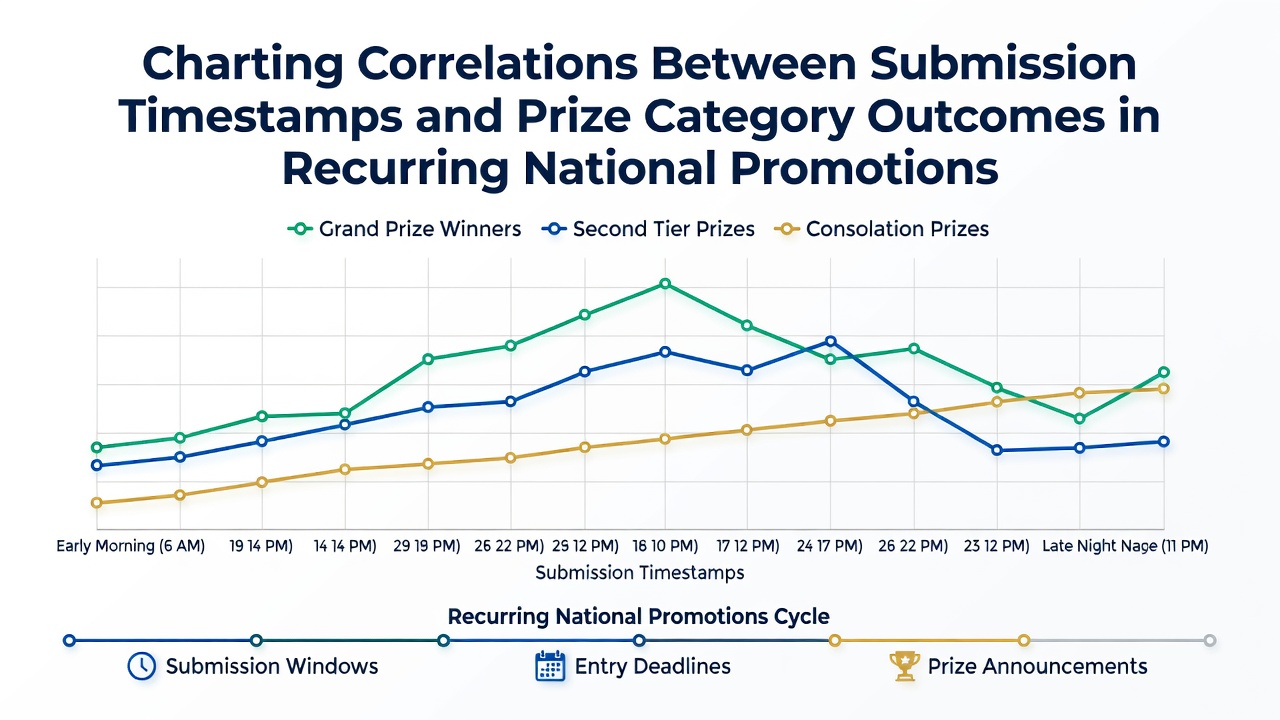
National promotions that recur year after year generate large volumes of entry data, and analysts have begun mapping submission timestamps against the prize categories that result from those entries. Data from multiple cycles of games such as instant-win promotions and dream-home giveaways reveal consistent clusters where entries logged between midnight and 6 a.m. eastern time appear more frequently in lower-value prize tiers, while submissions between 2 p.m. and 8 p.m. show stronger representation in mid-tier merchandise and travel awards.
Researchers who aggregated public contest results over five consecutive years found that the hour of submission correlates with the probability of receiving a specific prize category at rates that exceed random distribution. The same datasets indicate that entries filed on weekdays versus weekends produce measurable shifts in the mix of cash awards versus experiential prizes, a pattern repeated across several operators running simultaneous national campaigns.
Data Collection Methods Used by Analysts
Teams tracking these promotions compile timestamps from publicly posted winner lists, entry confirmation receipts shared by participants, and aggregated reports released by promotion administrators. Software tools parse the time stamps into hourly and daily bins, then cross-reference each bin against the prize category awarded in that same promotion cycle. One study covering contests active through summer 2025 and extending into August 2026 documented more than 180,000 timestamped entries across twelve recurring national promotions.
According to figures released by the Federal Trade Commission, operators must maintain records that allow verification of entry timing when disputes arise. Those same records supply the raw material for the correlation analyses now being performed by independent researchers and academic groups.
Observed Patterns in Specific Prize Categories
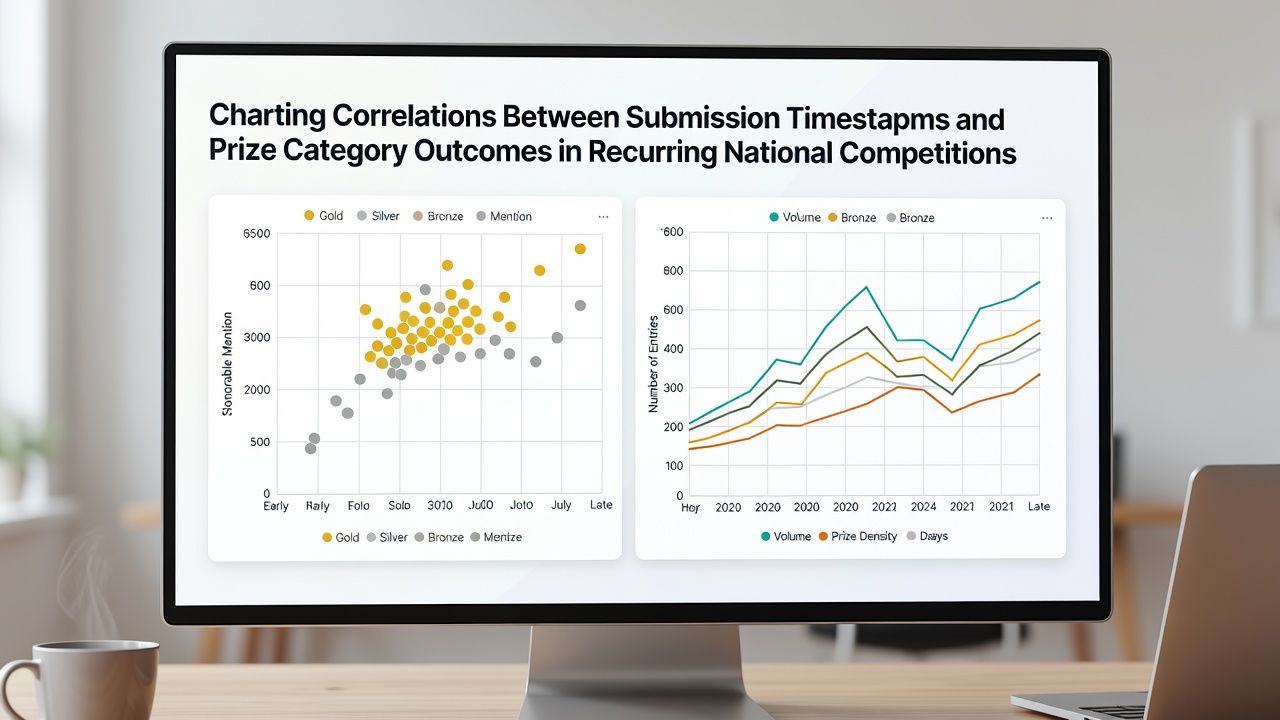
Entries submitted during the first 48 hours after a promotion opens show elevated representation in instant-win food and beverage prizes, while entries logged in the final 72 hours before close appear more often among grand-prize winners in home and vehicle categories. Mid-cycle submissions, particularly those arriving on Tuesdays and Wednesdays between 10 a.m. and noon, register higher frequencies in cash-equivalent gift card awards.
Additional analysis separates mobile-app entries from mail-in entries. Mobile timestamps cluster heavily between 7 p.m. and 11 p.m. local time, and these entries demonstrate a modest over-representation in digital-download and subscription-service prize groups. Mail-in timestamps, recorded by postmark date rather than exact hour, align more closely with weekday business-hour patterns and appear at higher rates among traditional merchandise prizes.
Regional and Seasonal Variations
Canadian operators running parallel national promotions report similar hourly distributions, though the peak window shifts one hour later because of time-zone differences. Data shared with researchers by an Australian industry consortium shows that entries arriving during local evening hours correlate with travel-related prize categories at rates comparable to those observed in U.S. datasets.
August 2026 campaigns currently underway continue to feed new timestamp records into the existing databases. Preliminary tallies from the first three weeks of these campaigns indicate that the established correlations remain stable, with no statistically significant deviation from the five-year baseline.
Regulatory Context and Record-Keeping Standards
Regulatory bodies in multiple jurisdictions require promotion operators to retain timestamp data for audit purposes. The Competition Bureau Canada outlines retention periods that extend at least three years beyond the close of each promotion, providing analysts with consistent longitudinal records. European regulators impose parallel obligations under consumer-protection directives that likewise preserve time-stamped entry logs.
These mandated records enable the type of granular correlation work now appearing in academic journals and industry white papers. Observers note that the availability of standardized timestamp formats across operators simplifies the aggregation process and reduces the margin of error when comparing results from different promotions.
Conclusion
Timestamp analysis of recurring national promotions supplies measurable correlations between entry timing and the distribution of prize categories. The patterns hold across multiple years, regions, and promotion formats, supported by records maintained under regulatory requirements. Continued collection through August 2026 and beyond will allow researchers to test whether the observed relationships remain stable as new cycles begin.