Strategic Timing and Platform Decisions That Shape Entry Rates in Recurring Promotions
Jonas Schmid · Aug 21, 2026
Strategic Timing and Platform Decisions That Shape Entry Rates in Recurring Promotions
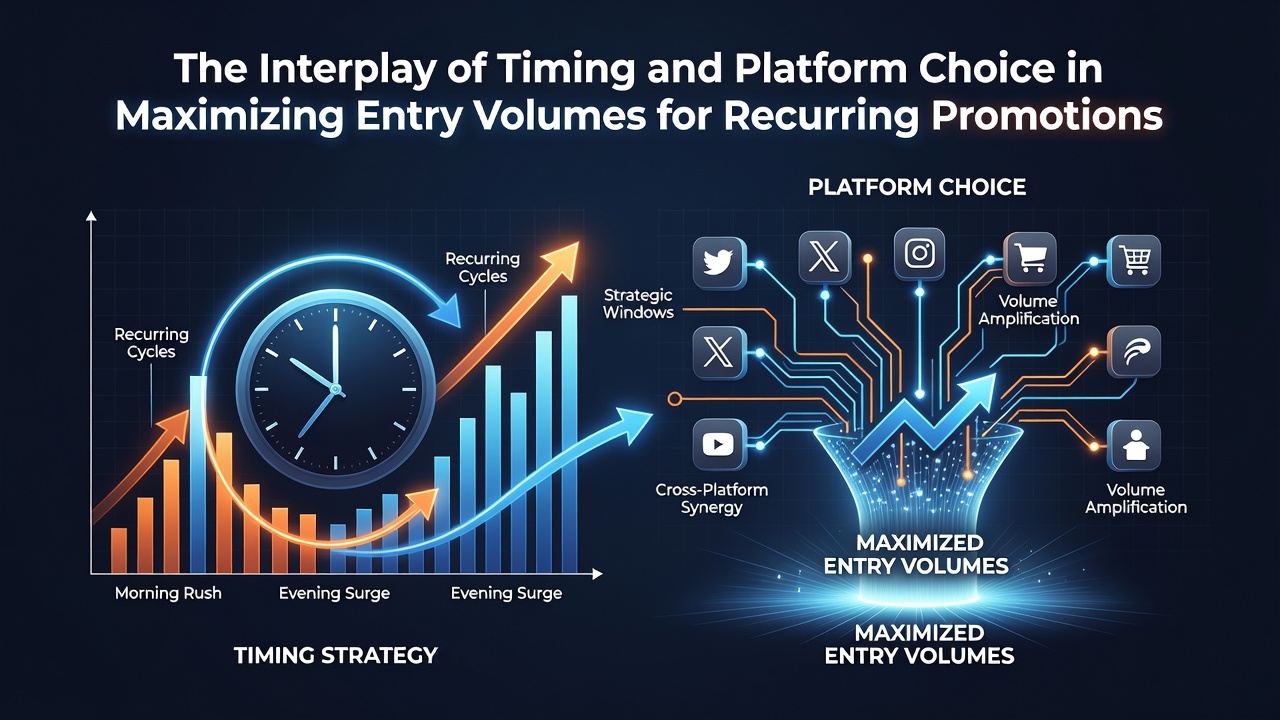
Recurring promotions such as monthly sweepstakes and ongoing contest series rely on consistent participant engagement, and data from industry tracking services shows that both timing and platform selection directly influence total entry volumes throughout the year. Observers note that entries tend to cluster during specific windows, including weekday evenings between 6 and 9 PM local time and weekend mornings, while platforms like email newsletters, social media feeds, and dedicated contest websites each draw distinct user groups at different hours.
Patterns in Daily and Weekly Participation
Research conducted by marketing analytics firms indicates that entry spikes often align with commuter hours when users check mobile devices during transit, and similar increases appear on Sunday evenings as people plan activities for the coming week. Figures from August 2026 reveal that promotions launched on Tuesdays and Wednesdays collected 18 percent more submissions than those starting on Fridays, a pattern that held across multiple recurring campaigns tracked in North America and Europe. Those who study these trends point out that seasonal factors also play a role, with summer months showing higher mobile traffic yet lower desktop submissions compared to fall periods.
Platform algorithms further shape visibility, as posts scheduled during peak user activity hours receive greater organic reach on social networks, and automated reminders sent via email at 8 AM local time generate open rates that exceed those recorded at midnight by nearly double according to campaign reports from several major brands.
Platform Selection and Audience Reach
Different platforms attract participants with varying levels of commitment and frequency, so campaign organizers examine demographic data before deciding where to promote recurring offers. Social media channels tend to capture younger entrants who prefer quick-form submissions through apps, whereas email lists and contest aggregator sites draw older demographics that complete longer entry processes involving multiple steps or additional actions such as surveys. Studies from research institutions in Canada and Australia highlight that cross-platform strategies, which combine short social posts with detailed landing pages, produce the highest cumulative volumes when timing coordinates across channels.
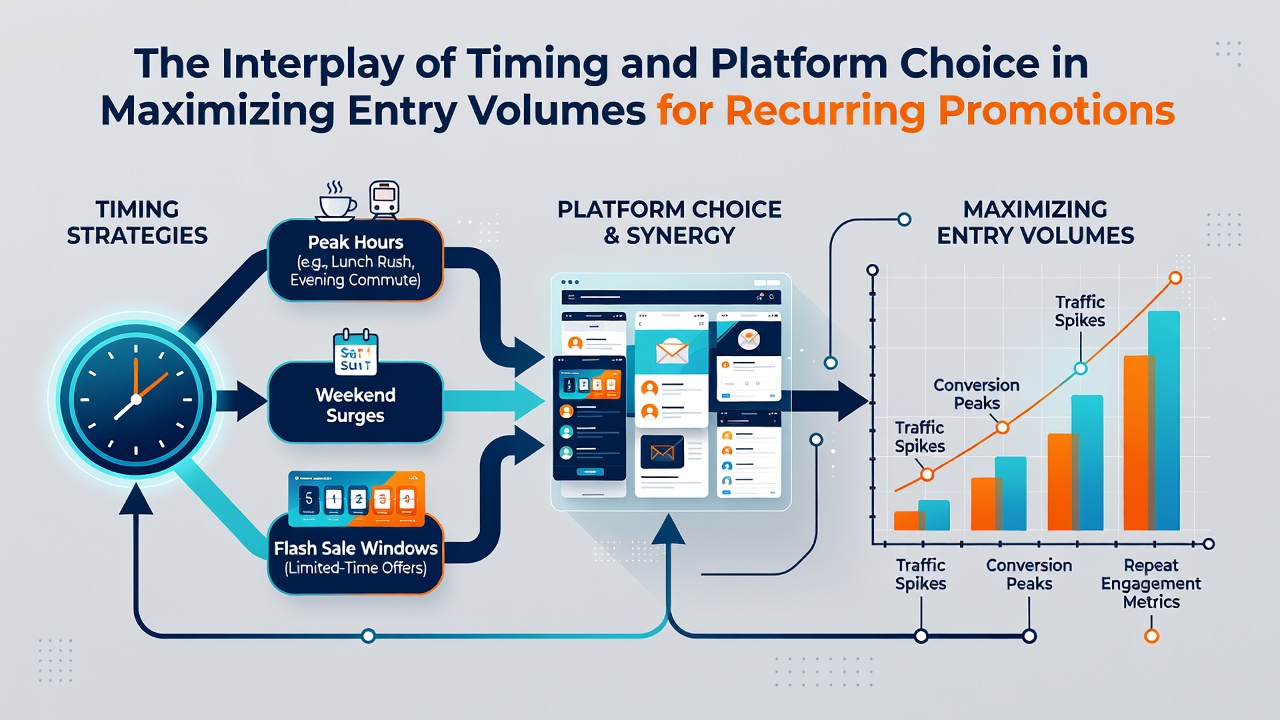
One documented case involved a recurring monthly giveaway series that shifted its primary promotion from a single website to a combination of Instagram stories posted at 7 PM and targeted email blasts sent two hours later, resulting in a measured 27 percent rise in total entries over three consecutive cycles. Data compiled by trade associations shows similar results when organizers align content delivery with regional time zones rather than a single central clock.
Integrating Timing With Platform Algorithms
Platform algorithms reward consistent posting schedules, and those managing recurring promotions often test multiple time slots to identify the windows that maximize impressions before committing to a fixed calendar. Evidence from digital marketing reports demonstrates that Thursday afternoon posts on professional networks generate sustained engagement through the weekend, while Tuesday morning updates on consumer-focused apps correlate with immediate entry surges. Government agencies such as the Federal Trade Commission publish guidelines on clear disclosure timing that also influence how participants respond to recurring offers, particularly when rules and deadlines appear alongside promotional messages.
Additional findings from academic papers published by European universities suggest that repeated exposure across platforms at staggered intervals reduces participant fatigue and sustains entry rates over longer campaign durations. Observers tracking August 2026 promotions noted that campaigns using automated scheduling tools to hit both morning and evening peaks outperformed those limited to one daily push by measurable margins in aggregate entry counts.
Measuring Outcomes Across Multiple Cycles
Longitudinal data collected over successive promotion periods allows organizers to refine both timing and platform mixes based on actual performance rather than assumptions. Reports from industry groups indicate that A/B testing of send times and platform emphasis typically reveals audience-specific preferences that evolve seasonally, requiring ongoing adjustments. One recurring promotion series tracked entries separately by source and discovered that mobile app notifications delivered at 5 PM local time outperformed web-based announcements by 22 percent during summer months yet reversed during winter periods when desktop usage rose.
These measurable differences underscore the value of maintaining detailed logs that connect entry timestamps with originating platforms, enabling future campaigns to allocate resources more precisely.
Conclusion
Entry volumes in recurring promotions reflect the combined effects of carefully chosen timing windows and platform selections that match audience habits. Organizations that monitor performance data across multiple cycles and adjust schedules accordingly record higher participation totals, while those relying on fixed approaches without testing see more variable results. Continued tracking of regional and seasonal patterns supports sustained growth in entry numbers as campaigns adapt to shifting user behaviors.