Spotting Timing Clues in the Fine Print of Sweepstakes Regulations
Avery Braun · May 20, 2026
Spotting Timing Clues in the Fine Print of Sweepstakes Regulations
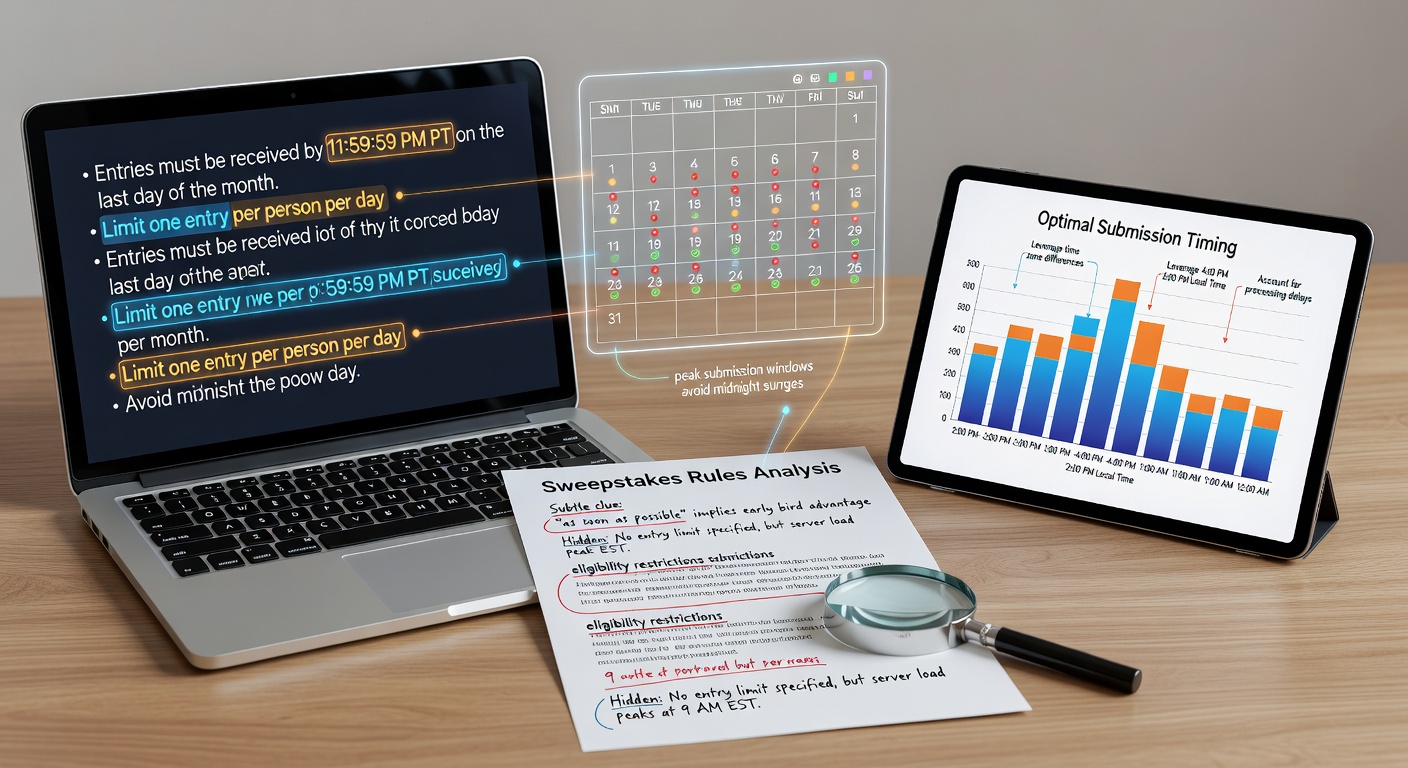
Contest organizers embed specific language in their official rules that dictate when entries receive the strongest consideration, and those details often appear in sections covering eligibility periods, drawing schedules, and receipt deadlines. People who review these documents carefully notice patterns where early submissions align better with random selection processes while later ones suit first-come-first-served formats.
Entry Windows and Their Hidden Indicators
Rules frequently specify start and end dates for submissions along with any qualifiers about when entries must arrive to qualify for particular drawings. Researchers who analyzed hundreds of contest documents found that phrases such as "entries received by 11:59 p.m. Eastern Time on the final day" signal a strict cutoff that rewards participants who submit well before peak server traffic occurs. Those same documents sometimes include clauses about multiple drawings throughout the promotion period, which creates opportunities for staggered entries rather than a single last-minute push.
Time zone references provide another layer of information because they reveal the organizer's operational base and the precise moment when daily limits reset. Observers note that contests managed from the Pacific Northwest often use Pacific Time for cutoffs, while national brands default to Eastern Time regardless of their headquarters location. This distinction matters when participants track rolling entry periods that reset at midnight in the designated zone.
Seasonal Factors and May 2026 Considerations
Many promotions tie their timelines to broader calendar events, and May 2026 features several overlapping periods including Mother's Day promotions, Memorial Day giveaways, and spring travel packages that close entries in late April. Data from industry tracking services shows increased volume during these windows, which means rules often tighten receipt requirements to manage higher traffic loads. Participants who examine the fine print discover that some contests extend grace periods for mail-in entries postmarked before a certain date even if they arrive after the stated deadline.
Random Draw Mechanics Versus Sequential Processing
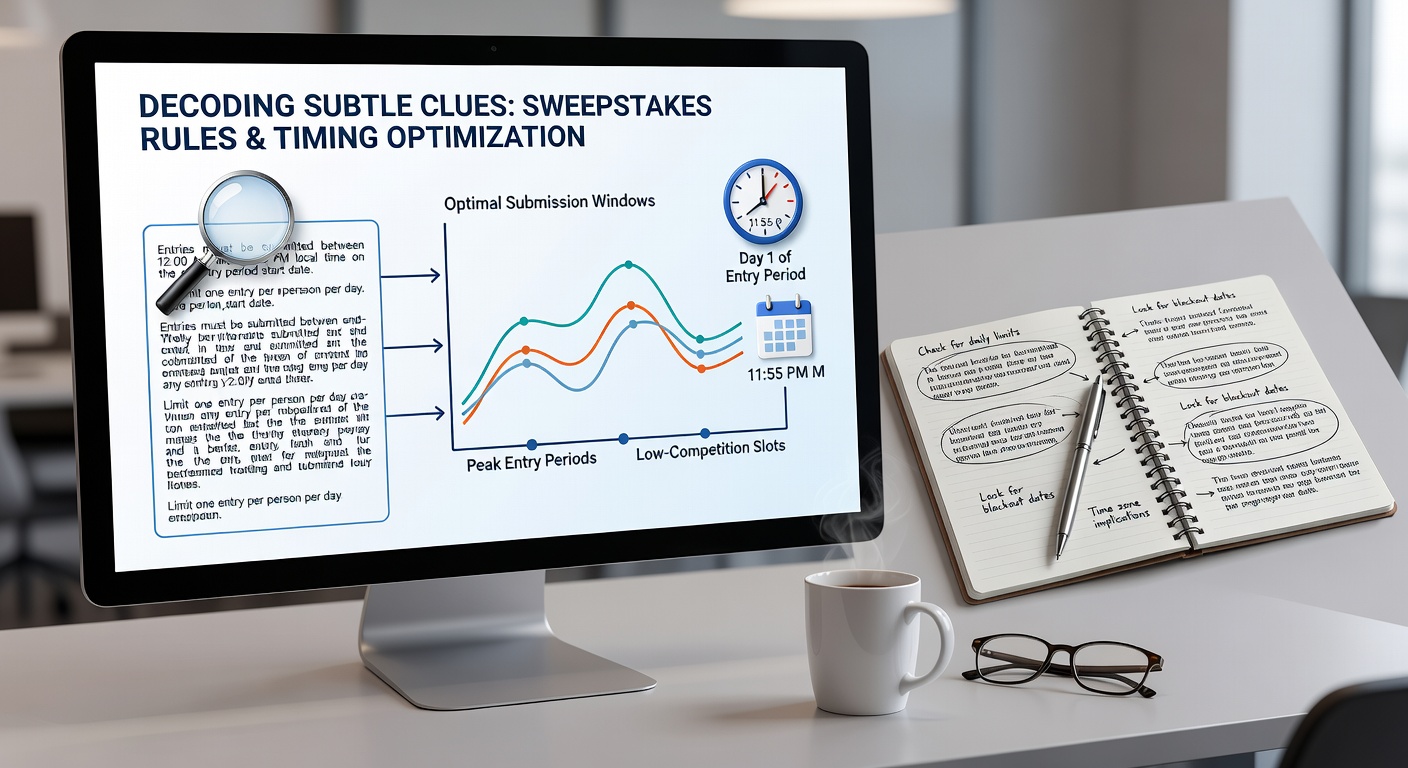
Rules that describe random selection methods usually list a specific drawing date after the entry period closes, which removes any advantage from early submission except for meeting basic eligibility. In contrast, contests that process entries on a rolling basis include language about limited quantities per day or per hour, making earlier action more advantageous. Those who study these distinctions report that hybrid formats combine both approaches, with initial random draws followed by sequential giveaways for remaining prizes.
According to guidelines published by the Federal Trade Commission, clear disclosure of all timing restrictions helps prevent disputes over when entries actually qualify. Similar standards appear in reports from Australia's Australian Competition and Consumer Commission, which emphasize precise language around deadlines and receipt verification.
Mail-In and Digital Submission Nuances
Traditional mail-in rules often contain postmark versus receipt distinctions that affect optimal timing, whereas digital entries face server timestamp rules that can shift based on volume. One study of promotion practices revealed that organizers sometimes accept entries with a valid postmark even when physical arrival occurs days later, creating a buffer for participants who plan ahead. Digital platforms, by comparison, log exact submission moments, which means rules mentioning "received and recorded by the system" reward those who avoid last-hour congestion.
Conclusion
Rules documents contain measurable signals about ideal submission windows once readers learn to identify phrases about drawing schedules, time zones, receipt methods, and seasonal overlaps. Those signals become particularly relevant during active periods such as May 2026 when multiple contests run simultaneously. Careful examination of these details allows participants to align their actions with the actual mechanics each promotion uses rather than relying on general assumptions about timing.