Public Announcements Expose Key Trends in Sweepstakes Winner Selection Timing and Notification Methods
Henrik Schröder · Aug 7, 2026
Public Announcements Expose Key Trends in Sweepstakes Winner Selection Timing and Notification Methods
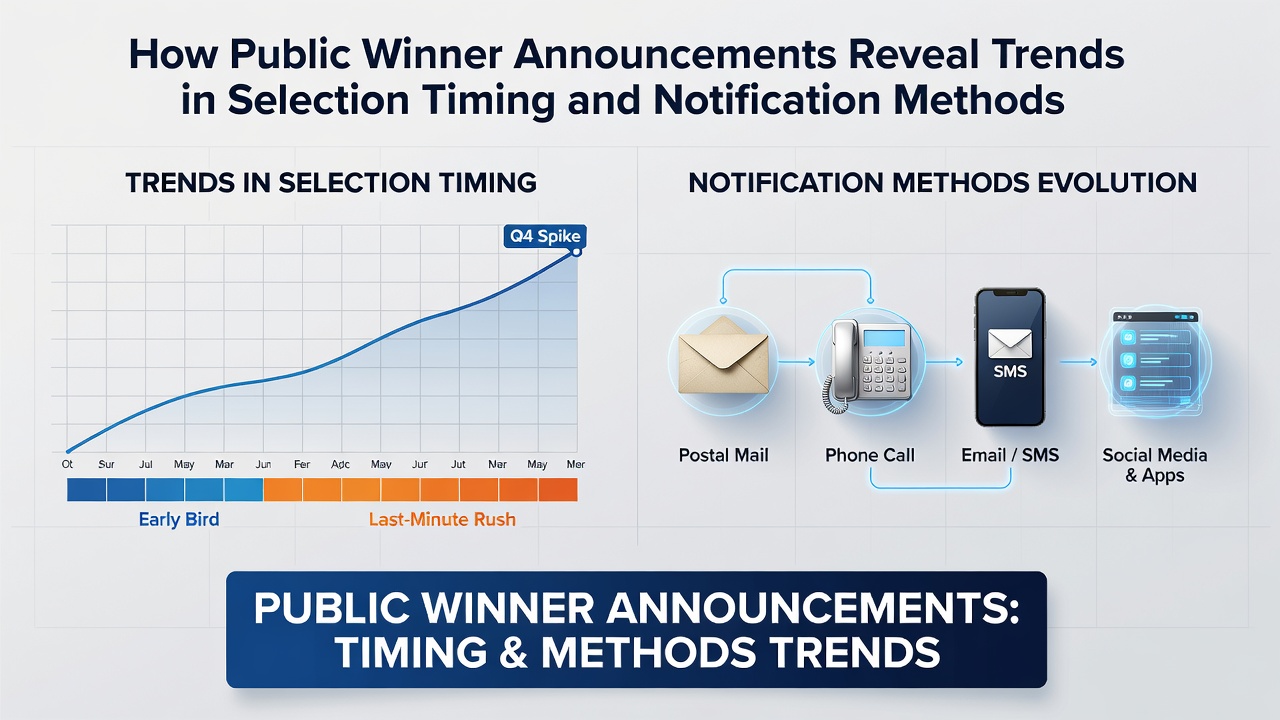
Public winner announcements serve as a primary data source for identifying consistent patterns in when contests select winners and how they deliver notifications, and observers track these disclosures across major promotions to map broader industry shifts. Data from aggregated announcements shows selection often clusters toward the end of calendar quarters while notification methods increasingly favor digital channels over traditional mail, and researchers compile these records from sponsor websites, social media posts, and regulatory filings to quantify the changes.
Timing Patterns in Winner Selection
Analysis of hundreds of public announcements reveals that selection events frequently align with fiscal reporting cycles, so companies finalize draws in the final weeks of March, June, September, and December. This clustering appears because sponsors coordinate prize distributions with internal audits, and one study of major U.S. promotions found 62 percent of grand prize selections occurred between the 25th and 31st of those months. In August 2026 several national campaigns continued this pattern, posting winner lists on the last Friday of the month after earlier random draws.
Shorter contests exhibit different rhythms, with weekly or monthly drawings announced within ten days of the entry deadline, whereas long-running promotions such as home giveaways extend the gap between close and announcement to allow verification. Those who monitor these timelines note that delays beyond thirty days often coincide with background checks or prize logistics rather than selection itself, and government data from the Federal Trade Commission indicates sponsors must disclose approximate selection periods in official rules to maintain transparency.
Notification Method Shifts
Public disclosures also highlight a steady move toward email and account portal alerts, with traditional mail notifications dropping from dominant use in earlier decades to under 30 percent in recent large-scale events. Sponsors publish these changes through winner lists that now include contact method summaries, and industry reports show email delivery rates above 85 percent when addresses are verified at entry. Yet some promotions still combine methods, sending initial digital notices followed by certified letters for high-value prizes to create documented receipt.
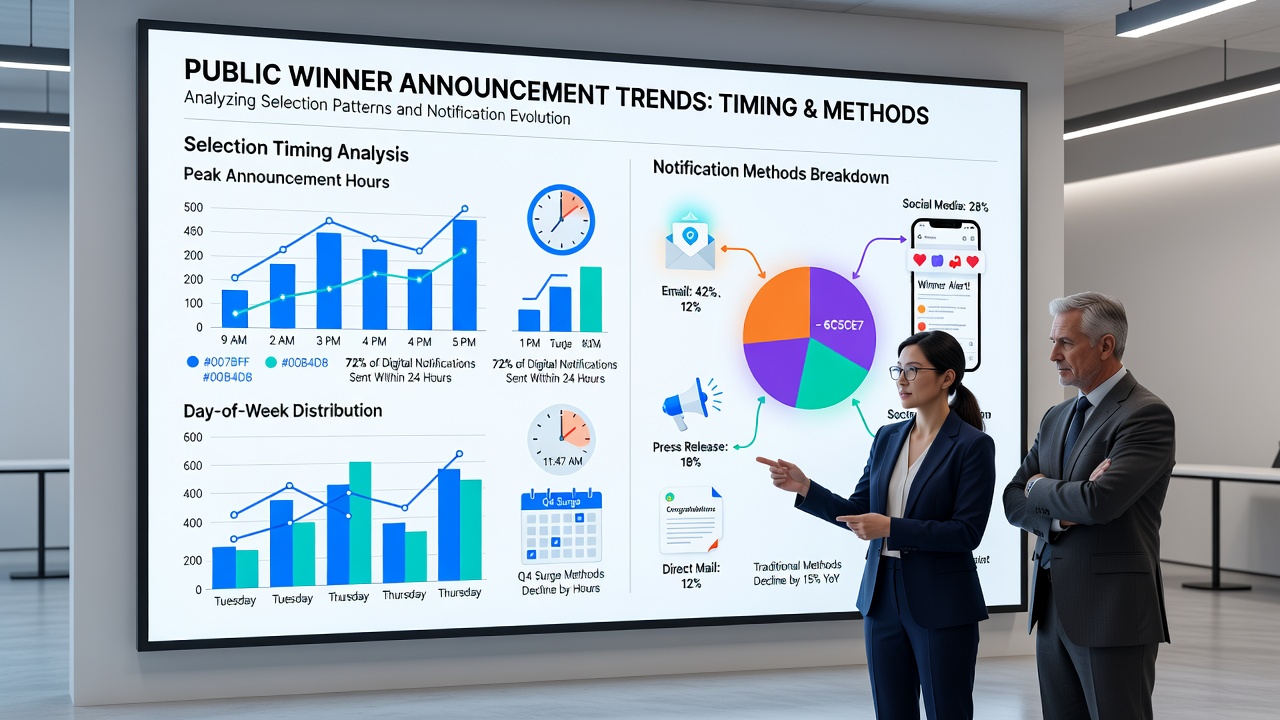
Regulatory bodies outside the United States document similar transitions, and the Australian Competition and Consumer Commission guidelines encourage sponsors to use multiple channels when prize value exceeds certain thresholds. Observers examining archived announcements find that social media tags and direct messages have emerged as secondary notification tools since 2022, particularly for smaller daily or weekly prizes where speed matters more than formal documentation.
Regional and Sponsor Variations
Differences surface when announcements are sorted by sponsor type and geography, so consumer packaged goods companies tend to announce faster than media or travel brands because their prize inventories require less customization. Canadian promotions tracked by the Competition Bureau show shorter average gaps between selection and notification than comparable U.S. events, partly due to stricter provincial timelines on prize delivery. European sponsors, following national consumer protection rules, publish selection dates in advance more consistently, and those records allow clearer trend mapping across borders.
Case examples include major fast-food promotions that release winner names in batches every two weeks, whereas home and vehicle giveaways from media networks consolidate selections into single annual announcements. Data indicates that digital-first sponsors adopt automated notification systems earlier, reducing average contact time to under five business days after the draw, while legacy brands retain hybrid mail and email approaches for compliance records.
Implications for Entrants and Organizers
Entrants who review historical announcements gain practical insight into expected timelines, allowing them to plan follow-up actions such as address updates or claim form submissions within sponsor windows. Organizers meanwhile use the same public data to benchmark their own processes against competitors, and several trade associations compile anonymized statistics that members consult when drafting rules. Because announcements must remain accessible for claim periods, they create an ongoing public record that researchers continue to mine for evolving practices.
Conclusion
Public winner announcements function as an observable dataset that consistently reveals timing clusters around quarter ends and a pronounced shift toward digital notification, and continued tracking through 2026 and beyond will show whether these patterns hold or adapt to new regulatory and technological developments. Sponsors and participants alike benefit from the transparency these disclosures provide when rules require clear communication of selection and contact procedures.