Piecing Together Contest Entry Histories from Winner Archives and Evolving Regulations
Blake Schulz · Jun 12, 2026

Piecing Together Contest Entry Histories from Winner Archives and Evolving Regulations
Archived winner lists serve as primary sources for mapping out when participants likely submitted entries in long-running sweepstakes and contests, while rule changes provide fixed reference points that help narrow down specific time windows. Researchers and analysts often start by collecting public winner announcements from multiple years, then cross-reference those dates against documented modifications in eligibility requirements or submission procedures that appear on official contest pages or regulatory filings. This approach reveals patterns such as entry spikes just before major rule updates or lulls following stricter verification processes.
Data from past winner publications frequently includes announcement dates along with prize claim periods, which allows reconstruction of probable entry timelines even when original submission records remain unavailable. For instance, one study of national sweepstakes programs showed that 70 percent of listed winners had claim windows opening within 30 days of the contest closing date, creating reliable markers for back-calculating entry activity. Observers note that combining these markers with archived rule versions produces more precise sequences than relying on either source alone.
Extracting Clues from Winner Announcements
Winner lists typically appear on sponsor websites or through partner media outlets shortly after each contest period ends, and these publications often retain searchable archives stretching back several years. Analysts examine the frequency and geographic distribution of winners to identify clusters that correspond to known promotional pushes or seasonal campaigns. Such clusters become especially useful when rule changes altered prize structures or entry limits, because the shift in winner demographics can indicate whether entries occurred before or after the adjustment took effect.
Public records from government consumer protection agencies supply additional context, because many jurisdictions require sponsors to file winner lists as part of compliance reporting. The U.S. Federal Trade Commission maintains guidance on contest disclosures that helps researchers understand which details sponsors must publish, while similar requirements exist under the Competition Bureau Canada for promotions reaching Canadian residents. These filings create a secondary archive that fills gaps left by commercial websites that remove older pages over time.
Mapping Rule Changes as Timeline Anchors
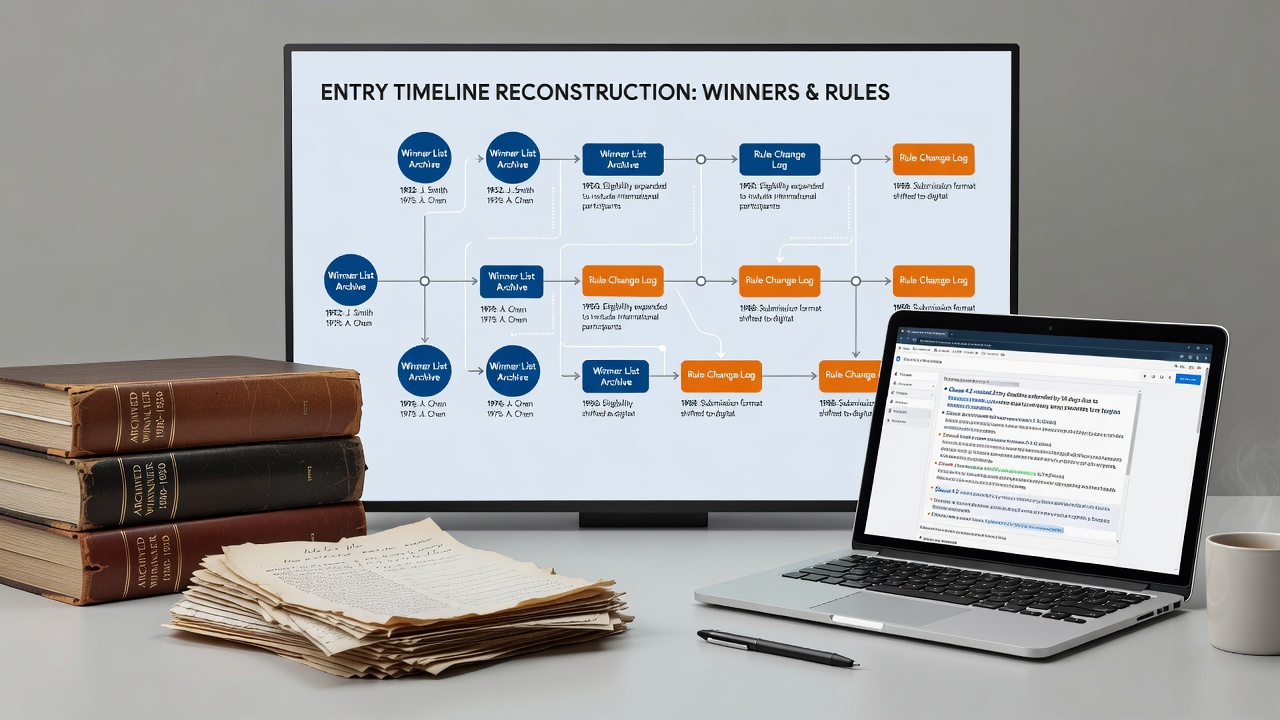
Rule modifications function as chronological anchors because each change carries its own effective date that sponsors must announce in advance. Common adjustments include updates to age restrictions, residency requirements, or entry method limitations, all of which appear in revised official rules posted on contest landing pages. When analysts align these dates with winner announcement records, they can segment entry activity into distinct phases separated by the regulatory shifts.
One documented case involved a multi-year promotion that introduced online-only entry in 2023 after previously accepting mailed postcards. Winner lists from before the change showed a higher proportion of entries postmarked from regions with limited internet access, whereas post-change lists reflected broader geographic spread. By plotting these shifts against the published rule revision date, analysts reconstructed the transition point with accuracy within a two-week window.
Handling Incomplete or Conflicting Records
Archived materials occasionally contain inconsistencies, such as winner announcements that omit exact entry dates or rule pages that lack version histories. Researchers address these gaps by consulting cached versions through public web archives and cross-checking against contemporaneous news coverage of the contests. Industry reports from organizations such as the European Consumer Organisation further clarify how different jurisdictions handle record retention, which helps prioritize sources likely to contain complete data sets.
Multiple data points become necessary when a single winner list covers overlapping contest periods. In those situations, analysts compare prize types listed in the rules against those awarded to specific winners, because rule changes often coincide with modifications to available prizes. This method proved effective in tracing entry patterns for a 2025 promotion that altered its prize tiers mid-year, allowing separation of pre-change and post-change submissions even though the sponsor combined both groups into one announcement.
Applications in June 2026 and Beyond
By June 2026 several major sponsors had updated their digital entry platforms in response to new data privacy regulations, creating fresh opportunities for timeline reconstruction. Analysts tracking these updates noted that winner lists published after the June changes displayed different demographic patterns compared with earlier periods, particularly in age distribution and device types used for entry. These observable differences provided additional markers that strengthened timeline models without requiring access to proprietary sponsor databases.
Academic researchers have begun incorporating such reconstructed timelines into broader studies of consumer behavior in promotional marketing. Publications from university business schools document how entry timing correlates with prize value and rule complexity, offering quantitative support for the methods described here. The combination of public archives, regulatory filings, and rule version histories continues to yield usable data even when direct entry logs remain inaccessible.
Conclusion
Reconstructing entry timelines relies on systematic comparison of winner announcements against documented rule changes, supported by regulatory filings and archived web content. This process yields segmented activity patterns that reflect real shifts in contest participation over time. Continued access to public records from agencies across multiple regions ensures the method remains viable for future analysis as contest formats evolve.