Patterns Emerge When Winner Lists From Various Prize Formats Are Cross-Referenced
Blake Schulz · Aug 14, 2026
Patterns Emerge When Winner Lists From Various Prize Formats Are Cross-Referenced
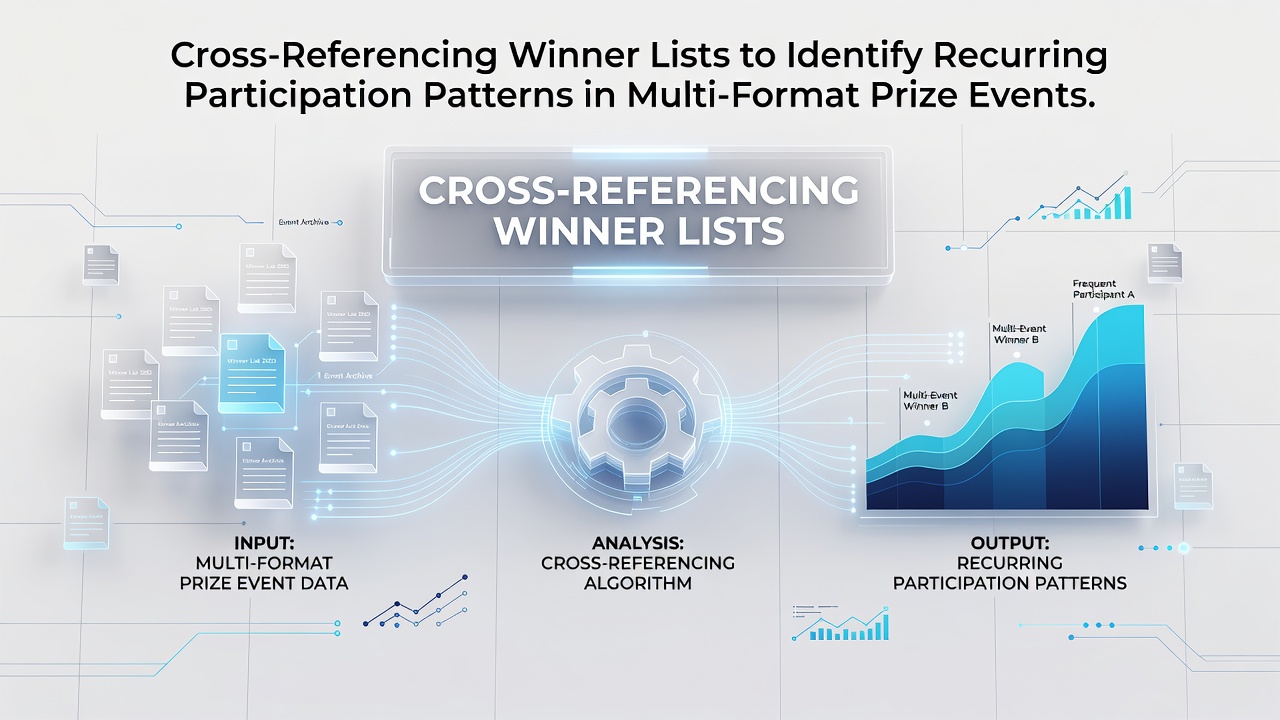
Cross-referencing winner lists involves compiling names and details from contests that span digital entries, mail-in submissions, retail purchases, and social media engagements, then matching those records to spot individuals who appear repeatedly across formats. Organizers and analysts perform this process by standardizing data fields such as full names, entry dates, and geographic indicators before running matches through spreadsheets or database tools. The approach reveals participation frequencies without relying on self-reported surveys, since official winner announcements serve as the primary source material.
In August 2026 several multi-format prize events released their complete winner rosters within days of each other, creating an unusually dense dataset for this type of comparison. Analysts noted that certain names surfaced in both online instant-win games and mail-based sweepstakes, while other entrants remained confined to single-format pools. Such overlaps become visible only after lists are aligned chronologically and by prize category, allowing patterns of consistent entry behavior to surface.
Data Standardization Steps Used in Cross-Referencing
Before any matching occurs, raw winner lists require cleaning so that minor spelling variations or address formats do not obscure genuine repeats. Analysts convert all entries to uppercase, expand abbreviations, and separate first and last names into distinct columns. Dates are normalized to a common format, and prize types are categorized under broad headings such as travel, cash, or merchandise. Once standardized, simple spreadsheet functions or database queries can flag duplicate names across files, after which manual review confirms whether the matches represent the same person or coincidental name collisions.
Geographic data adds another layer of verification. When two entries share a name and a city or postal code, the likelihood of a true repeat rises sharply. Lists from events that publish only partial addresses still permit city-level matching, though full street details improve accuracy. Researchers have documented that this method identifies recurring participants even when entrants use slight variations in middle initials or suffixes across different contests.
Observed Frequency Patterns Across Formats
Examination of combined lists shows that a subset of participants appears in three or more distinct events within a single calendar year. These individuals often enter both digital and physical formats, suggesting they maintain multiple entry channels rather than limiting activity to one method. In contrast, the majority of winners appear on only one list, indicating that sporadic participation accounts for most recorded successes. Frequency counts derived from cross-referenced data therefore separate habitual entrants from occasional ones without requiring additional surveys.

Time-based analysis further refines the picture. Names that recur across events spaced weeks or months apart demonstrate sustained engagement rather than concentrated bursts around major promotions. Data aggregated from 2025 and 2026 events indicates that repeat appearances cluster more densely in the first half of the year, possibly because many annual contests announce results during that period. This temporal distribution emerges clearly only after lists are merged and sorted by announcement date.
Privacy and Legal Considerations in List Analysis
Publicly posted winner lists fall under disclosure requirements that vary by jurisdiction. Federal Trade Commission guidelines specify what information promoters must release, while similar rules in other regions impose additional restrictions on address publication. Analysts who cross-reference these lists operate within the bounds of publicly available data, avoiding any attempt to contact or profile individuals beyond what the announcements already disclose. Compliance with these disclosure standards ensures that pattern identification remains an observational exercise rather than a privacy intrusion.
Industry reports from the Australian Competition and Consumer Commission outline parallel obligations for contest operators in that country, emphasizing transparency while limiting secondary use of winner information. Observers note that such regulatory frameworks indirectly shape the datasets available for cross-referencing, since only certain fields appear consistently across borders.
Applications for Event Organizers and Researchers
Promoters use cross-referenced findings to adjust marketing strategies, directing follow-up communications toward entrants who have already demonstrated multi-format interest. Academic researchers studying consumer behavior similarly employ the method to quantify loyalty or habit formation in prize-seeking activities. Because the underlying data originates from official announcements, conclusions drawn from these comparisons rest on verifiable records rather than anecdotal evidence.
Software tools ranging from basic spreadsheet macros to specialized matching algorithms accelerate the process, yet human oversight remains necessary to resolve ambiguous matches. As more events publish digital winner lists in standardized formats, the volume of comparable data continues to grow, supporting finer-grained analysis of participation rhythms across seasons and regions.
Conclusion
Cross-referencing winner lists supplies a concrete method for mapping recurring participation in multi-format prize events, relying on public records that organizers release after each drawing. The technique identifies frequency patterns, temporal clusters, and format preferences through straightforward data alignment and matching procedures. Regulatory disclosures in multiple jurisdictions govern what information enters these datasets, ensuring that analytical work stays within established transparency rules. Continued publication of detailed winner information in August 2026 and beyond will expand the scope for such examinations, allowing researchers and organizers to track shifts in entry behavior across evolving contest landscapes.