Mapping Entry Histories Using Publicly Disclosed Winner Information in Multi-Round Contests
Blake Schulz · Jul 31, 2026
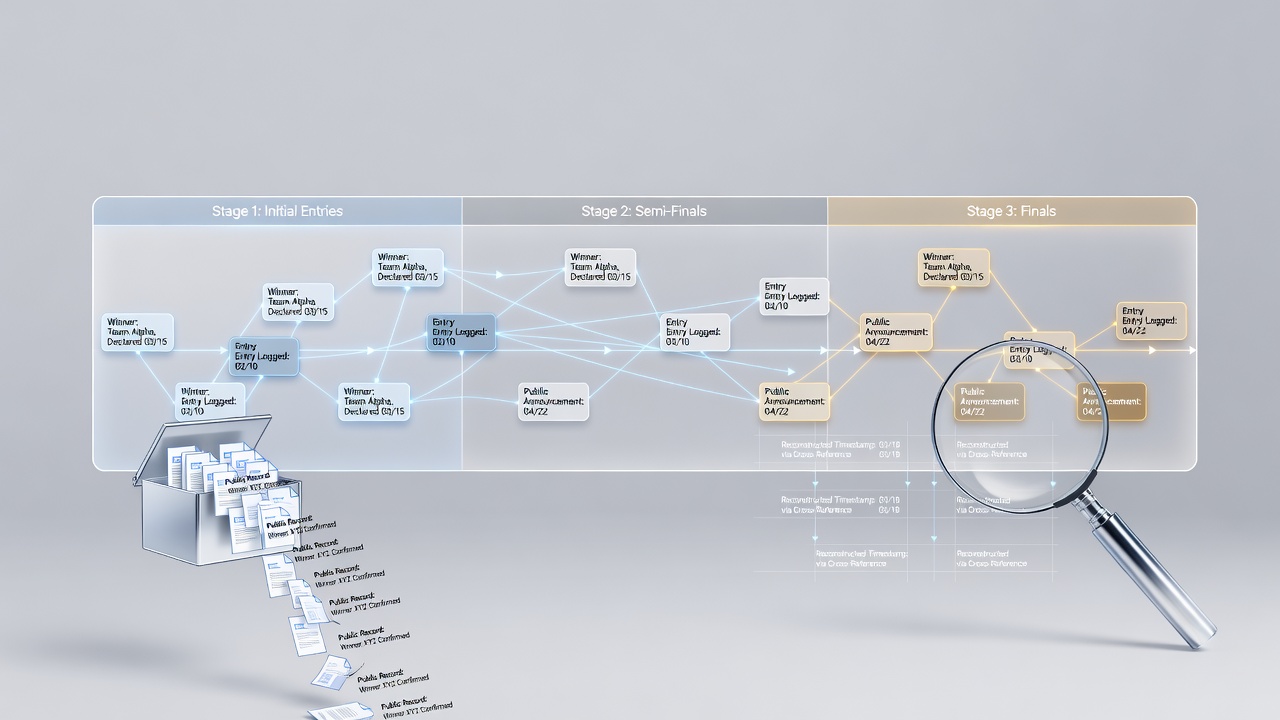
Mapping Entry Histories Using Publicly Disclosed Winner Information in Multi-Round Contests
Public winner declarations in competitions with multiple qualifying rounds, semi-finals, and final selections provide structured data points that allow researchers adn analysts to reconstruct entry timelines with considerable precision, and this process relies on cross-referencing announcement dates against published rules and eligibility windows. Multi-stage events often release winner lists at each phase, creating a chronological record that reveals when participants likely submitted entries because organizers typically set fixed intervals between stages that correspond to processing and verification periods mandated by regulatory frameworks.
Core Mechanisms Behind Timeline Reconstruction
Analysts begin by collecting official winner announcements from contest websites, press releases, and regulatory filings, then align those dates with the competition's published schedule to estimate entry windows for each stage. Data from the Federal Trade Commission shows that many U.S.-based promotions must disclose prize award dates and verification procedures, which creates predictable gaps between entry deadlines and public declarations. Observers note that these gaps typically span 30 to 90 days depending on the number of entries received and the complexity of eligibility checks, allowing patterns to emerge across repeated events.
Similar practices appear in other jurisdictions, where the Australian Competition and Consumer Commission requires transparent disclosure of winner selection methods in promotional lotteries, and this requirement generates comparable datasets for timeline mapping. Researchers have documented cases where winner lists published in July 2026 for international contests revealed clustered entry periods that aligned with seasonal marketing campaigns, demonstrating how external factors such as holiday promotions or fiscal year resets influence submission timing.
Practical Examples from Layered Contest Formats
One documented case involved a multi-national product promotion that advanced participants through regional qualifiers, national semi-finals, and a global final round, with each stage announcing winners on fixed dates that permitted reconstruction of the full participation sequence. Analysts matched the announcement cadence against entry form availability periods listed in the official rules, revealing that most successful entries arrived in the first two weeks of each qualifying window. Studies from academic research institutions have confirmed that such patterns hold across dozens of events when sufficient public data exists, particularly when organizers maintain consistent announcement schedules year after year.
Regulatory and Data Considerations
Regulatory bodies in Canada and the European Union impose additional record-keeping requirements that further support timeline reconstruction, since many jurisdictions mandate retention of entry records for audit purposes and occasionally release aggregated statistics. These disclosures often include the total number of entries received per stage, which analysts combine with winner counts to estimate conversion rates and typical entry volumes during specific periods. Figures from industry reports indicate that staged competitions with cash or travel prizes generate higher entry volumes in the final weeks before each deadline, a pattern visible when comparing successive winner declaration dates.
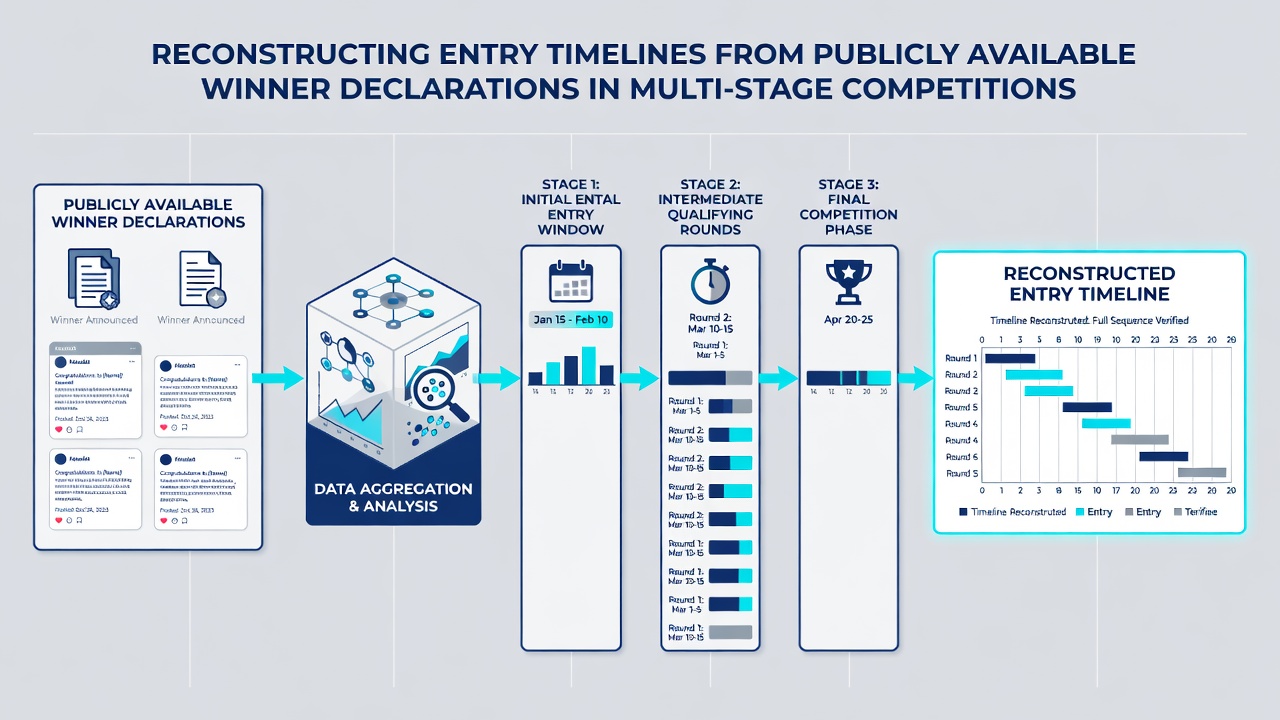
Cross-border events introduce additional variables because different countries enforce distinct disclosure timelines, yet the overlapping announcement schedules still permit analysts to build unified chronologies when they account for time zone differences and local regulatory calendars. Trade associations representing promotion agencies have published guidelines that emphasize consistent winner notification practices, and these standards create reliable reference points for timeline work across multiple jurisdictions.
Limitations and Accuracy Factors
Reconstruction accuracy depends on the completeness of public declarations and the consistency of organizer practices, since some competitions withhold intermediate winner lists or combine stages in single announcements. When full stage-by-stage data remains unavailable, analysts supplement public records with archived website captures and social media posts that document earlier winner notifications. Evidence from multiple research papers demonstrates that combining these sources increases timeline precision, particularly when events span several months or cross calendar years.
Those who study these patterns emphasize that entry volume fluctuations often correlate with external events such as media coverage spikes or changes in prize structures, and winner declaration dates provide the necessary anchors to test such correlations. Organizations that maintain long-term databases of contest outcomes have observed that multi-stage formats produce more granular data than single-draw events, making them especially useful for detailed timeline analysis.
Conclusion
Public winner declarations serve as reliable markers for mapping entry activity across multi-stage competitions when analysts apply systematic cross-referencing techniques against published rules and regulatory disclosures. The resulting timelines reveal participation patterns that reflect both organizer scheduling and external influences, offering factual insights into how entrants engage with phased contest structures over time. Continued access to these declarations supports ongoing refinement of reconstruction methods across different regions and competition types.