Historical Winner Data Unlocks Clues to Sweepstakes Success Patterns
Blake Schulz · May 27, 2026
Historical Winner Data Unlocks Clues to Sweepstakes Success Patterns
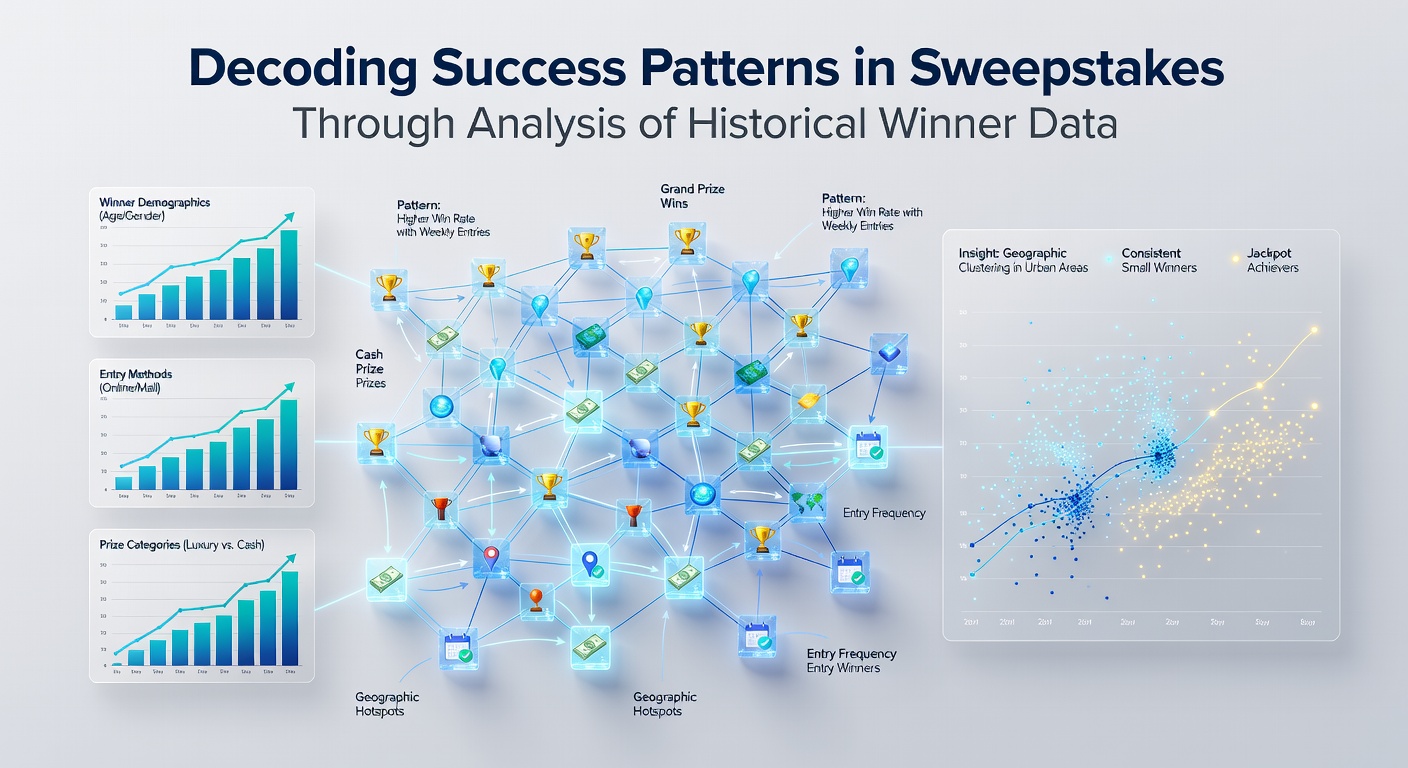
Researchers and analysts have spent years poring over publicly available winner lists, entry records, and regulatory filings to identify recurring traits among sweepstakes participants who claim prizes, and the resulting datasets show consistent trends across thousands of contests spanning several decades. Data from multiple sources indicates that winners tend to cluster around certain entry methods and submission timings, while geographic and demographic distributions reveal broader participation patterns that repeat year after year. Those who've compiled these records note that volume of entries correlates strongly with success rates, yet timing and format choices also appear repeatedly in the histories of frequent winners.
Entry Volume and Frequency Trends Across Decades
Comprehensive reviews of winner announcements from national and regional sweepstakes demonstrate that individuals submitting multiple entries per contest account for a disproportionate share of prizes when rules permit, and records spanning the 1990s through the present confirm this pattern holds across both online and mail-in formats. Figures from industry compilations reveal that participants who maintain steady submission schedules throughout a contest's duration outperform those who enter only near deadlines, while data sets from major brands show repeat winners often employ systematic tracking of open promotions. Analysts who examined these archives found that contests allowing daily entries produce winner pools with higher representation from dedicated entrants compared to one-time submission events.
Timing Patterns in Successful Submissions
Historical databases tracking thousands of sweepstakes outcomes point to elevated win rates for entries submitted during the first and last weeks of promotion periods, and cross-referenced studies of both short and long-running contests support this observation across varied prize categories. Records maintained by consumer protection agencies and contest organizers indicate that mid-period entries sometimes show lower representation among winners, possibly due to lower overall submission volumes during those intervals. Observers reviewing multi-year datasets note that time-of-day patterns also surface in digital contests, with morning submissions appearing more frequently in winner logs for certain platforms, although these correlations vary by promotion type and region.
Demographic and Geographic Distributions in Winner Records
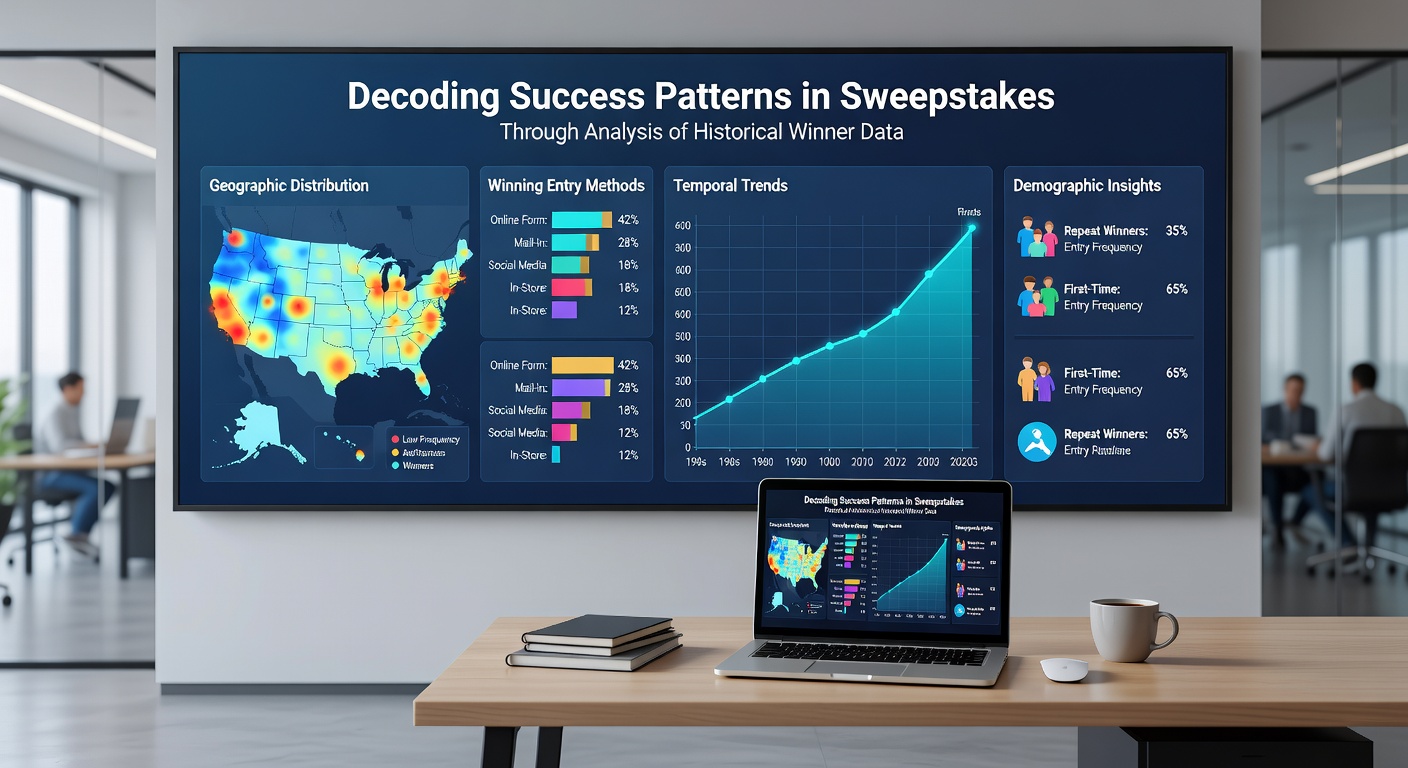
Analysis of publicly released winner information from U.S. and Canadian sweepstakes highlights recurring regional concentrations, with higher win representation from states and provinces that host larger populations or feature more active local media coverage of contests, and similar patterns emerge in European data sets examined by independent researchers. Demographic breakdowns drawn from aggregated winner profiles show balanced gender participation in many national promotions yet reveal age clusters around 35 to 55 in several long-term studies, while income and education variables appear less consistently documented. Government reports from competition bureaus in Australia and the European Union further illustrate how urban versus rural winner ratios shift depending on contest visibility and entry accessibility, patterns that persist across annual reviews.
Method Preferences Among Documented Winners
Side-by-side comparisons of entry method data from historical winner lists indicate that online portals and social media submissions have grown dominant in recent years, while mail-in entries retain strong representation in certain legacy promotions, and records from 2020 onward reflect accelerated adoption of digital channels across most major brands. Studies tracking method-specific success rates find that participants who diversify across allowed formats often appear more frequently in final winner announcements than those relying on single channels, and regulatory filings confirm these trends continue into 2026. As of May 2026, ongoing promotions continue to feed fresh data points into these archives, allowing analysts to test whether established patterns hold under evolving platform rules and privacy regulations.
Cross-referenced reports from the Federal Trade Commission and the Australian Competition and Consumer Commission show that rule-compliant entries using verified accounts produce more reliable tracking outcomes, which in turn supports cleaner historical comparisons. Those compiling multi-decade datasets emphasize that format shifts driven by technology have not erased earlier patterns but rather layered new variables onto existing volume adn timing correlations.
Implications for Ongoing Data Collection
Continued aggregation of winner information from both public announcements and regulatory disclosures enables increasingly granular pattern detection, and institutions maintaining these repositories report steady growth in available records as digital promotions proliferate. Future analyses will likely incorporate additional variables such as device type and referral sources as these details become more consistently available in public filings. The accumulation of such data provides a foundation for testing hypotheses about success factors without relying on anecdotal reports alone.
Conclusion
Longitudinal examination of sweepstakes winner histories yields measurable patterns in entry volume, timing, demographics, and method selection that repeat across diverse contests and time periods, and these patterns remain visible in datasets extending into 2026. Observers tracking these records continue to refine analytical approaches as new promotions generate additional data points, supporting more precise identification of recurring success indicators. The expanding body of historical information offers a factual basis for understanding participation dynamics across the sweepstakes landscape.