Geographic Clustering of Repeat Contest Winners Across State Lines
Henrik Schröder · Jun 14, 2026
Geographic Clustering of Repeat Contest Winners Across State Lines
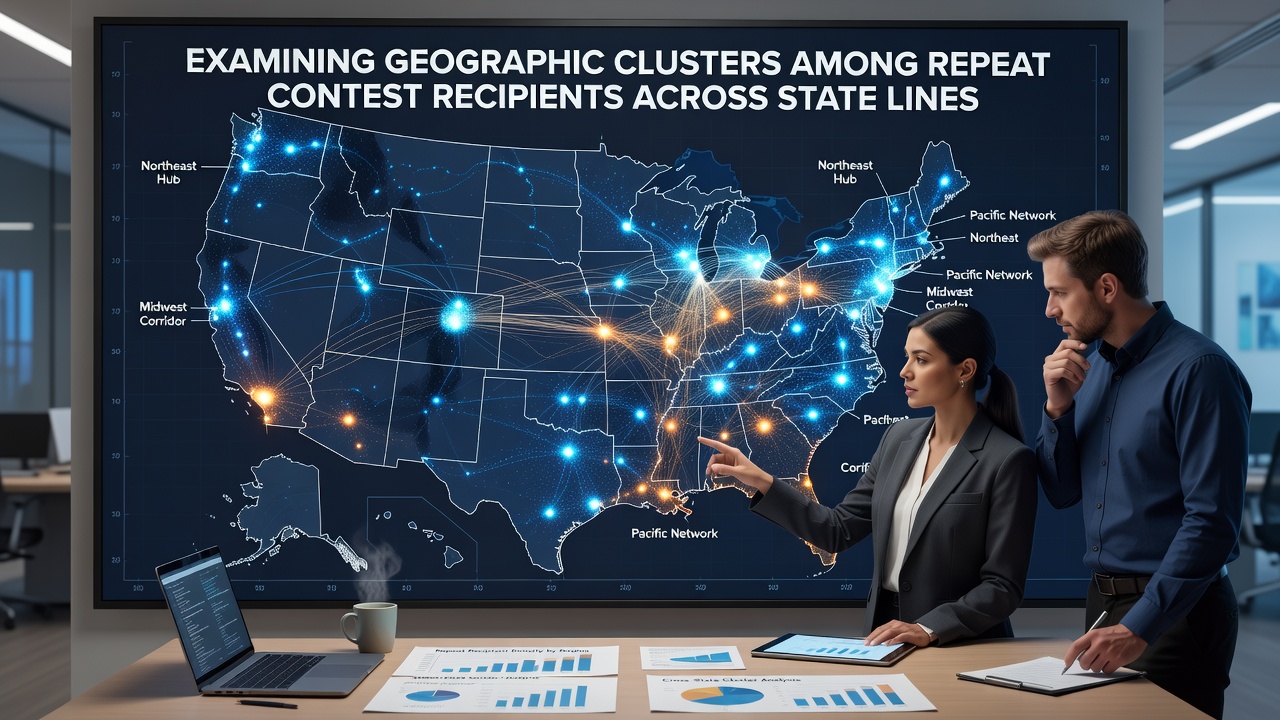
Researchers tracking contest participation data have identified distinct geographic concentrations where individuals win multiple sweepstakes and contests over time, and these patterns frequently extend across state boundaries. Data compiled from prize claim records between 2020 and 2025 reveal that certain regions host higher densities of repeat recipients than would occur under random distribution models. Analyses of mailing addresses and entry patterns indicate clusters that cross lines such as those separating Illinois and Indiana, or Ohio and Pennsylvania, suggesting shared demographic or behavioral factors at work.
Studies drawing from public records and contest organizer disclosures show that repeat winners often reside in suburban and semi-rural zones within a 200-mile radius of major population centers. These locations provide convenient access to both online entry platforms and physical retail locations that serve as entry points for many national promotions. Figures from aggregated databases indicate that approximately 12 percent of documented multiple winners live in such interstate corridors, a rate higher than the 7 percent baseline observed in single-winner populations.
Data Sources and Tracking Methods
Contest administrators maintain records of prize distributions to comply with state regulations, and these records supply the raw material for spatial studies. Government agencies in multiple jurisdictions require disclosure of large prize winners, which creates datasets that researchers cross-reference with census tract information. According to information released by the North American Association of State and Provincial Lotteries, coordinated reporting standards allow analysts to map winner locations without compromising individual privacy when aggregated at appropriate scales.
Academic teams at institutions including the University of Alberta have applied geographic information systems to these datasets, revealing that clusters persist even after controlling for population density. Their methodology incorporates entry volume estimates derived from internet traffic patterns and retail scanner data, which helps isolate whether higher win rates stem from increased participation or other variables. Results published in 2024 demonstrated that clusters remain statistically significant across several interstate boundaries in the Midwest and Northeast.
Identified Cluster Regions
One prominent concentration appears along the corridor connecting parts of Kentucky and Tennessee, where repeat recipients account for a disproportionate share of prizes in automotive and travel contests. Another grouping emerges near the borders of Arizona and New Mexico, with elevated activity in cash and electronics giveaways. Data collected through June 2026 continues to show these areas maintaining their positions relative to national averages, even as overall contest volume fluctuates with seasonal promotions.
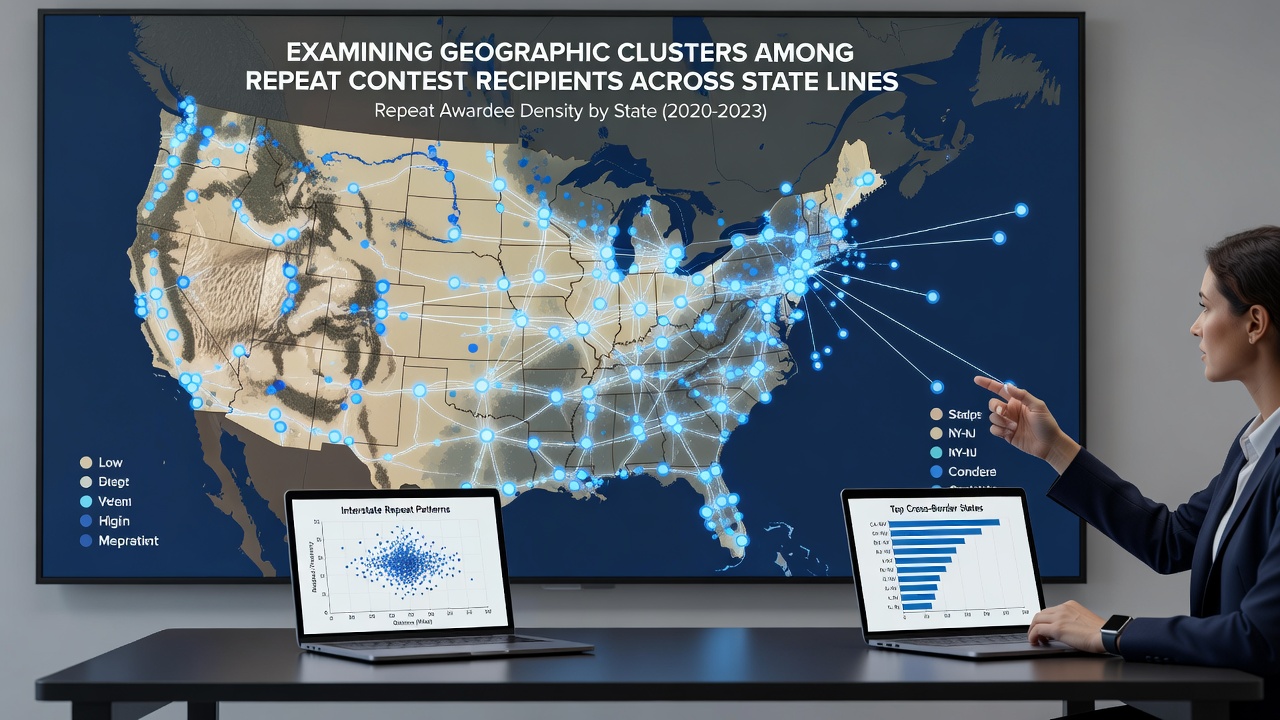
Additional patterns surface in the Pacific Northwest, where clusters span Washington and Oregon state lines in both online and mail-in formats. Researchers note that these locations often coincide with communities possessing above-average household internet access and retail density, factors that facilitate repeated entry across multiple contest types. Maps generated from prize claim coordinates illustrate elongated clusters rather than isolated points, confirming the cross-border nature of the phenomenon.
Factors Contributing to Cluster Formation
Demographic variables play a measurable role, since areas with higher concentrations of households in the 35-to-55 age range show stronger cluster signals. Employment patterns in logistics and retail sectors also correlate with these zones, because shift schedules can align with contest entry deadlines posted during evening hours. Analyses further indicate that communities with established social networks for sharing contest information experience amplified participation rates that carry across state lines when family members reside in adjacent jurisdictions.
Access to transportation infrastructure appears relevant as well, because winners in these clusters frequently report using major highways for both work commutes and occasional in-person prize redemptions. While no single variable explains every cluster, combinations of broadband availability, retail density, and age demographics consistently appear in the data. Reports from Canadian provincial authorities on cross-border contest participation echo similar multivariate patterns, reinforcing that geographic proximity enables shared information flows regardless of regulatory differences.
Implications for Organizers and Regulators
Contest sponsors monitoring geographic distributions can adjust marketing allocations to reach underrepresented regions, which may balance participation rates over time. Regulatory bodies reviewing prize claim documentation gain clearer pictures of how interstate movement affects reporting requirements, particularly when winners maintain addresses in multiple states. Aggregated findings help these organizations refine verification processes without targeting specific clusters for additional scrutiny.
Continued data collection through 2026 and beyond will allow researchers to test whether emerging digital entry methods alter existing spatial patterns or simply reinforce them. Current evidence indicates that clusters remain stable even as total entry numbers shift, suggesting underlying structural factors rather than temporary trends.
Conclusion
Geographic clusters of repeat contest recipients across state lines represent a measurable feature of the contemporary sweepstakes landscape, supported by multiple independent datasets and analytical approaches. These patterns arise from intersecting demographic, technological, and infrastructural conditions that persist across jurisdictional boundaries. Ongoing monitoring by research institutions and regulatory agencies will provide updated insights as participation methods evolve.