Calendars as Organizational Tools for Tracking Multiple Daily Contest Entries
Paul Braun · Jul 29, 2026
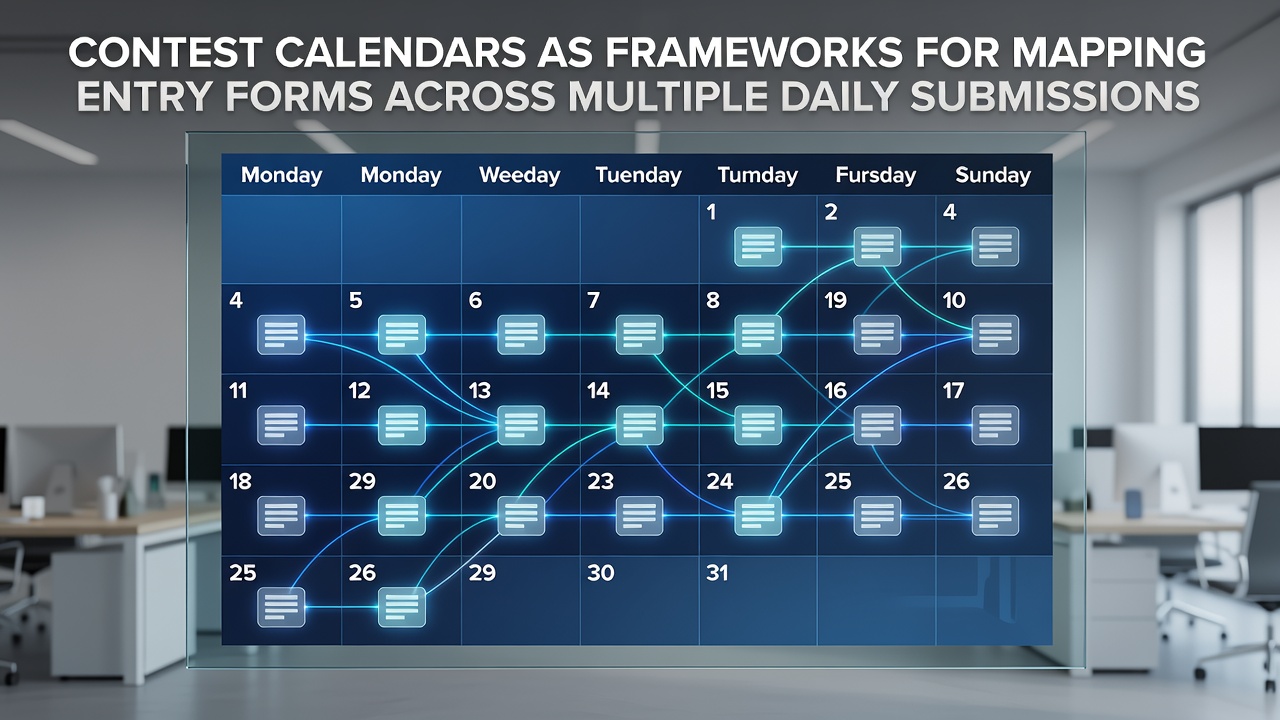
Calendars as Organizational Tools for Tracking Multiple Daily Contest Entries
Contest calendars serve as structured systems for organizing daily submissions across numerous entry forms, and observers note that participants often rely on these frameworks to coordinate efforts without overlap or missed opportunities. Data from industry reports indicates that structured tracking methods reduce errors in high-volume entry scenarios, particularly when forms require repeated daily interactions on platforms ranging from retail promotions to media giveaways. Researchers have documented patterns where calendar integration allows for systematic mapping of deadlines, eligibility criteria, and confirmation requirements across multiple sources simultaneously.
Core Components of Calendar-Based Mapping Systems
Effective frameworks begin with categorization of entry types, and experts have observed that users divide submissions into recurring daily tasks versus one-time events within shared digital calendars. This approach connects form fields such as email verification steps, captcha completions, and account logins to specific time slots, which helps maintain consistency when handling dozens of entries per day. Studies from academic institutions show that color-coded labels and recurring event functions further support this mapping process by highlighting patterns in submission windows that align with promotional cycles throughout the year.
Mapping extends beyond simple date entry because it incorporates details about each form's unique requirements, and those who have analyzed these systems report that including notes on browser compatibility, mobile optimization, and regional restrictions prevents common submission failures. In July 2026, for instance, seasonal promotions tied to summer events often feature daily entry mechanics that benefit from pre-mapped calendar blocks to accommodate fluctuating availability across different time zones.
Practical Implementation Across Platforms
Participants integrate calendar tools with spreadsheet logs or dedicated software to cross-reference entries, and figures from consumer behavior analyses reveal that this combination supports tracking of confirmation emails, prize notifications, and rule updates in one centralized view. The process involves assigning each contest form to a recurring slot while noting variables like entry limits per account or daily caps enforced by organizers. Evidence suggests that such methods scale effectively when users manage submissions for family members or group efforts, as shared calendar access allows real-time updates without duplicating work.
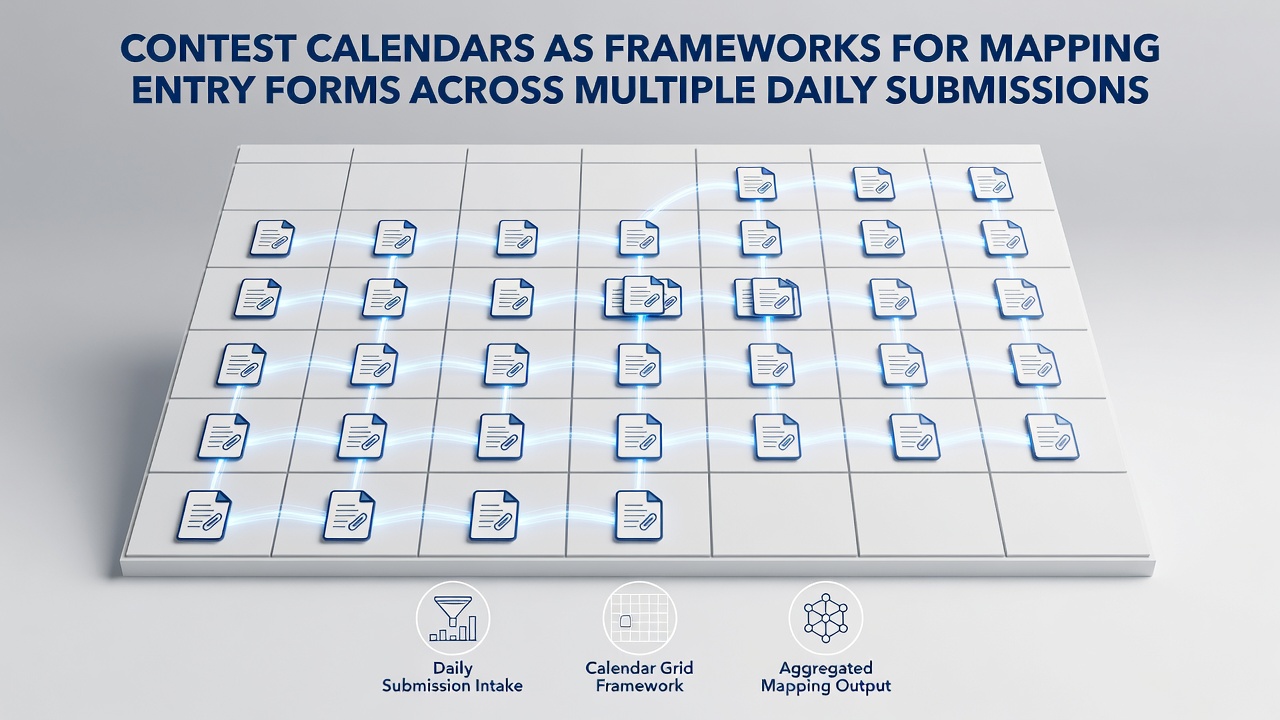
Integration with external data sources adds another layer, and according to reports from the Australian Competition and Consumer Commission, clear documentation of terms helps participants avoid violations related to multiple account usage or geographic eligibility. Calendars function as visual aids that display these constraints alongside submission schedules, which streamlines compliance checks during peak periods when many contests run concurrently.
Technical Considerations for High-Volume Submissions
Automation features within calendar applications connect directly to reminder systems, and data indicates that push notifications timed to entry windows improve completion rates for forms that reset at midnight or specific hours. Observers have noted that users often layer additional mapping elements such as priority rankings based on prize values or entry difficulty, which guides daily workflows when time constraints arise. Research from university studies on productivity tools highlights that these layered approaches maintain accuracy even as the number of active contests grows into the hundreds.
Security protocols factor into the mapping process because repeated logins across sites introduce risks, and guidelines from regulatory bodies like the Federal Trade Commission emphasize the importance of secure credential management within tracking systems. Calendars that include encrypted note sections allow storage of relevant access details without compromising separate password managers, thereby supporting safe handling of multiple daily submissions over extended periods.
Adaptations for Seasonal and Regional Variations
Frameworks adjust for regional differences in contest regulations, and evidence from European consumer protection agencies shows that mapping tools help account for variations in data privacy rules that affect form submissions across borders. In practice, users incorporate flags for location-specific requirements into their calendars, which prevents conflicts when entering international promotions that run alongside domestic ones. This adaptability proves useful during periods like July 2026 when cross-border travel promotions increase alongside local giveaways.
Long-term tracking within these systems also reveals trends in entry success rates, and industry analyses indicate that participants refine their mappings over months by reviewing completed entries against outcomes. Such iterative adjustments strengthen the overall framework without requiring entirely new setups each season.
Conclusion
Contest calendars function as reliable frameworks for mapping entry forms across multiple daily submissions by combining visual scheduling with detailed requirement tracking. The methods described draw from documented practices that emphasize organization, compliance, and integration with supporting tools. Continued refinement of these systems aligns with evolving contest formats and regulatory landscapes observed across various regions.