Archives Uncover Decades-Long Trends in Sweepstakes Winner Geography and Prize Categories
Blake Schulz · Jun 19, 2026
Archives Uncover Decades-Long Trends in Sweepstakes Winner Geography and Prize Categories
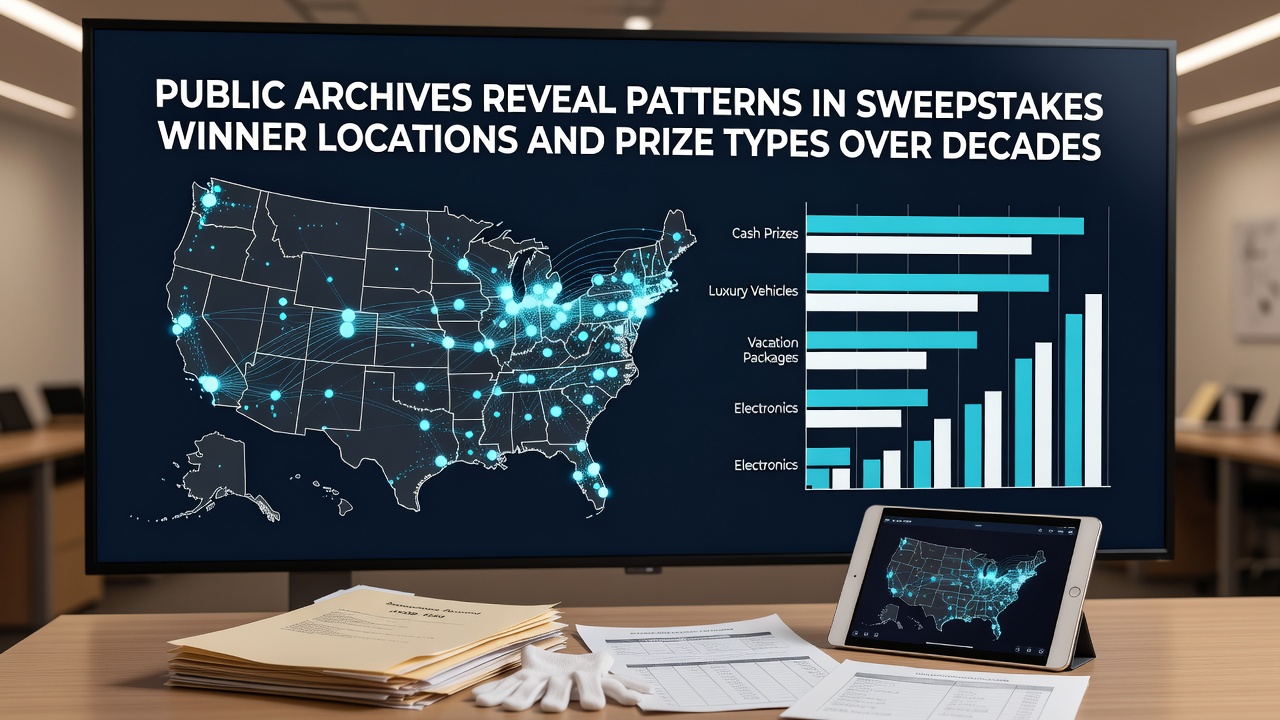
Public archives spanning more than sixty years contain detailed winner lists, claim forms, and promotional records that reveal consistent geographic clustering among sweepstakes participants along with clear shifts in the types of prizes awarded over time. Researchers examining these materials note that certain states and urban centers appear repeatedly in the data while prize categories moved from modest cash awards in earlier decades toward larger experiential and lifestyle items in later periods.
Geographic Distribution Patterns Across Regions
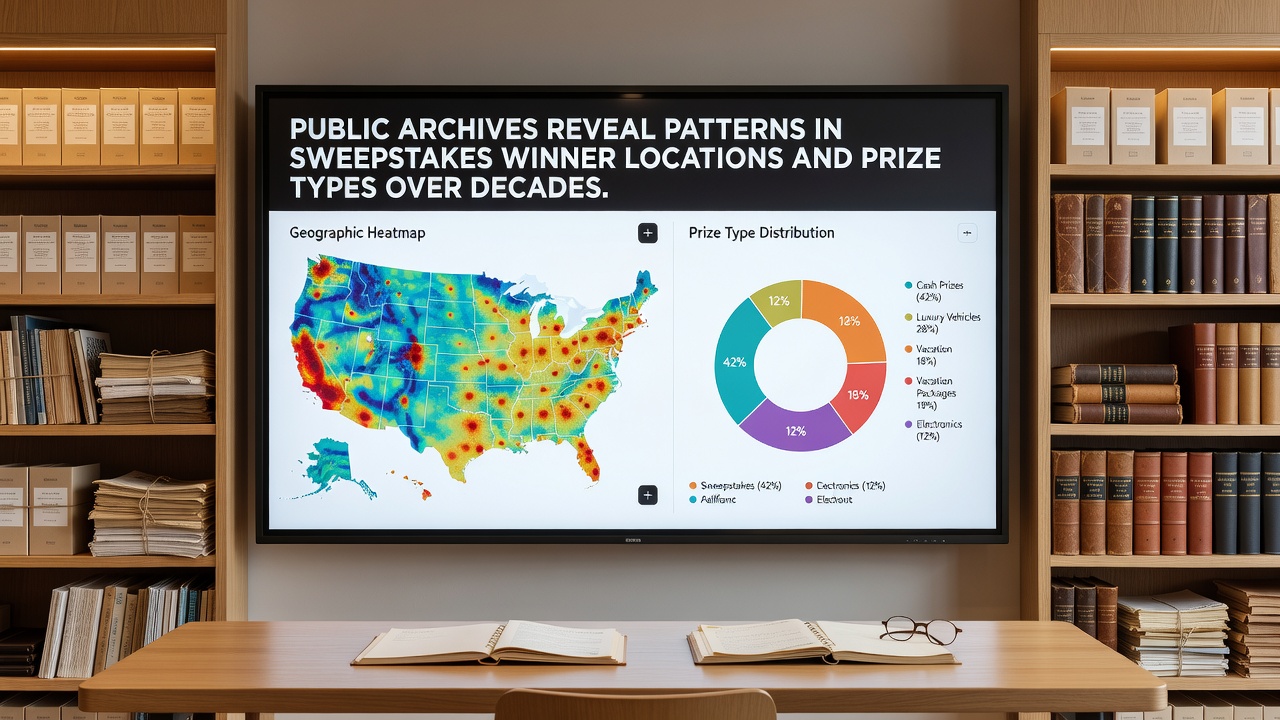
Records from the 1960s through the 1980s show elevated numbers of winners concentrated in Midwestern and Northeastern states, with Illinois, Ohio, and New York accounting for a disproportionate share of documented claims relative to population size. Data compiled from newspaper announcements and corporate archives indicates that these areas maintained higher participation rates, likely tied to denser retail distribution networks for entry forms and product packaging that carried sweepstakes promotions. By the 1990s the pattern began to broaden, with increased representation from Southern and Western states coinciding with expanded national advertising campaigns and the growth of supermarket chains that distributed entry mechanisms more evenly.
Public filings and Freedom of Information Act releases further demonstrate that rural counties in several states produced winners at rates comparable to metropolitan areas during the 2000s, although urban postal codes continued to generate higher absolute numbers. Analysts reviewing these archives point to improved mail delivery infrastructure and later the introduction of online entry options as factors that reduced earlier geographic barriers without eliminating regional concentrations entirely.
Evolution of Prize Categories Over Sixty Years
Early archival materials from the 1960s and 1970s list cash awards and small household appliances as the dominant prize types, with average values remaining under five hundred dollars in most documented cases. Corporate records indicate that manufacturers favored these categories because they aligned with product lines and required simpler fulfillment processes. Beginning in the 1980s, automobile giveaways increased in frequency, appearing alongside cash in roughly thirty percent of major national promotions according to preserved promotional materials.
The 1990s and 2000s brought expanded categories that included travel packages and home improvement prizes, reflecting changes in consumer marketing strategies. Archives from major retailers show that dream-home contests and vacation packages grew from less than ten percent of total prizes in 1985 to nearly forty percent by 2010. Recent materials extending into 2025 and early 2026 continue this trajectory, with experiential prizes such as event tickets and educational opportunities appearing alongside traditional cash and vehicle awards.
Seasonal and Temporal Variations Documented in Records
Monthly breakdowns preserved in corporate and regulatory filings reveal recurring peaks in winner announcements during late fall and early winter months, corresponding with holiday-themed promotions that historically drew larger entry volumes. Data extending through June 2026 continues to reflect this pattern, although online entry systems have slightly flattened monthly distributions compared with earlier paper-based eras. Prize-type preferences also display seasonal tendencies, with travel-related awards more common in spring and summer campaigns while cash and vehicle prizes appear more evenly throughout the year.
Regulatory and Industry Data Sources
Cross-referenced materials from government statistical agencies provide additional context for these trends. Reports issued by Statistics Canada document participation patterns in Canadian sweepstakes that mirror U.S. geographic concentrations during overlapping decades. Separate analyses from the Australian Bureau of Statistics track prize category shifts in that region, showing parallel movement toward experiential awards after 2000. These independent datasets allow observers to compare how regulatory environments in different countries influenced the availability and distribution of sweepstakes promotions over time.
Conclusion
Public archives therefore supply a continuous record that documents both the persistence of certain geographic winner clusters and the gradual diversification of prize offerings across more than six decades. Continued examination of newly released materials through 2026 and beyond offers researchers further opportunities to track how entry methods, marketing practices, and regulatory frameworks shape these long-term patterns.