Archives Reveal Evolution of Sweepstakes Regulations Amid Shifting Consumer Protection Standards
Henrik Schröder · Jun 21, 2026
Archives Reveal Evolution of Sweepstakes Regulations Amid Shifting Consumer Protection Standards
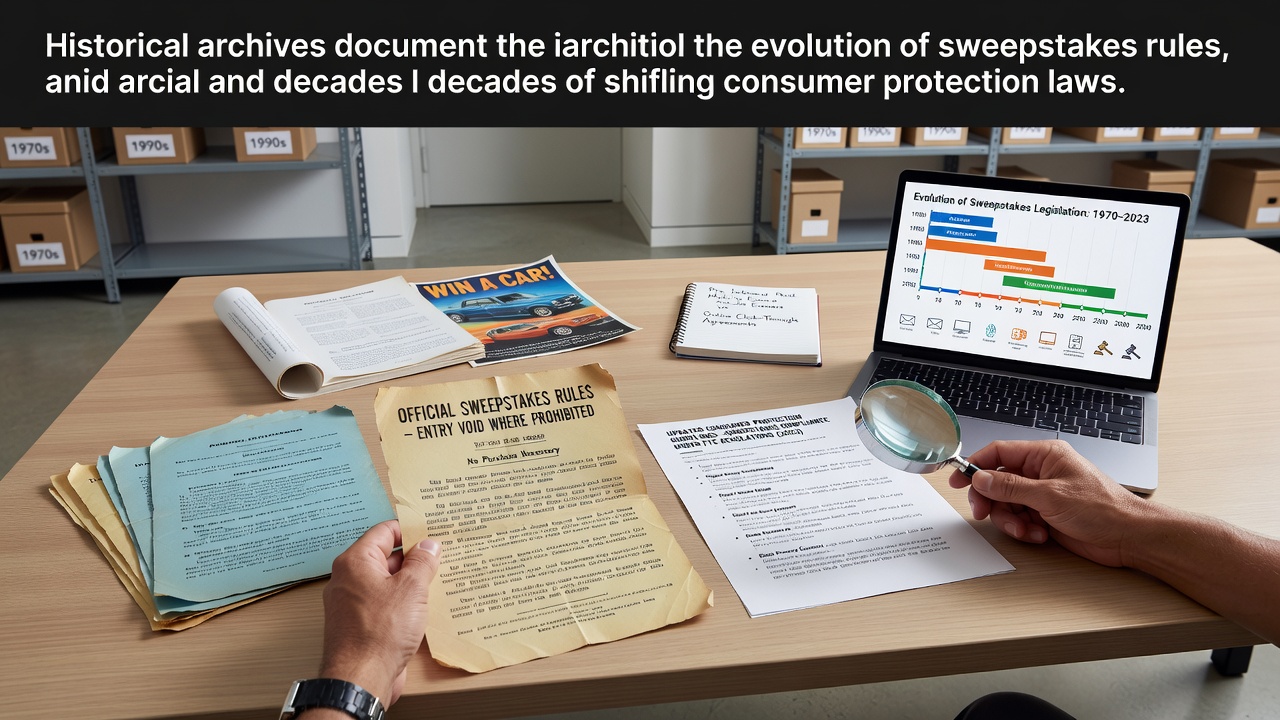
Historical archives preserve primary sources that trace how sweepstakes rules adapted to consumer protection laws across multiple decades, and these collections span government filings, corporate records, and court documents from the 1950s onward. Researchers access these materials to observe patterns in regulatory adjustments that responded to concerns over deceptive practices, eligibility requirements, and prize disclosure standards.
Early Documentation in Postwar Legal Reforms
Archival collections from the 1950s and 1960s contain original sweepstakes entry forms alongside correspondence between state attorneys general and contest sponsors, and these materials illustrate initial responses to laws that required clear odds disclosure and prohibited misleading advertising claims. Data from the Federal Trade Commission archives shows that enforcement actions in this period prompted sponsors to revise rules that had previously allowed vague terms about winner selection processes.
One study of preserved promotional materials reveals that many companies updated their official rules to include residency restrictions and age minimums after new state statutes took effect in the early 1960s, while industry reports from that era document how sponsors incorporated these changes into printed materials distributed through newspapers and magazines.
Regulatory Shifts Documented Through the 1970s and 1980s
Collections at university libraries and state historical societies hold transcripts from legislative hearings where consumer advocates testified about sweepstakes practices, and these records demonstrate how amendments to unfair trade practices acts influenced rule modifications such as mandatory free entry alternatives and geographic limitations on participation. Observers note that corporate compliance files from this time frequently reference specific statutes that required sponsors to maintain records of prize distribution for audit purposes.
By the late 1970s, archives reveal increased emphasis on no-purchase-necessary clauses in official rules, a development tied to federal and state consumer protection measures that aimed to prevent tying contest entry to product purchases. Figures from regulatory filings indicate that sponsors began standardizing these provisions across multiple jurisdictions to avoid separate rule sets for each state.
International Comparisons in Archival Records
Documents preserved by Canadian regulatory bodies and Australian consumer affairs agencies provide comparative examples of how sweepstakes rules evolved under different legal frameworks, and these materials show variations in requirements for skill-based elements versus pure chance contests. Researchers cross-reference these international archives with U.S. sources to identify common trends in transparency mandates that emerged during the 1980s and 1990s.
European Union directives on consumer rights appear in later archival materials from the 1990s, where sponsors adjusted rules to address cross-border participation and data privacy concerns related to entry submissions. Industry association reports from this period link these adjustments to broader harmonization efforts across member states.
Digital Transition and Contemporary Archival Practices
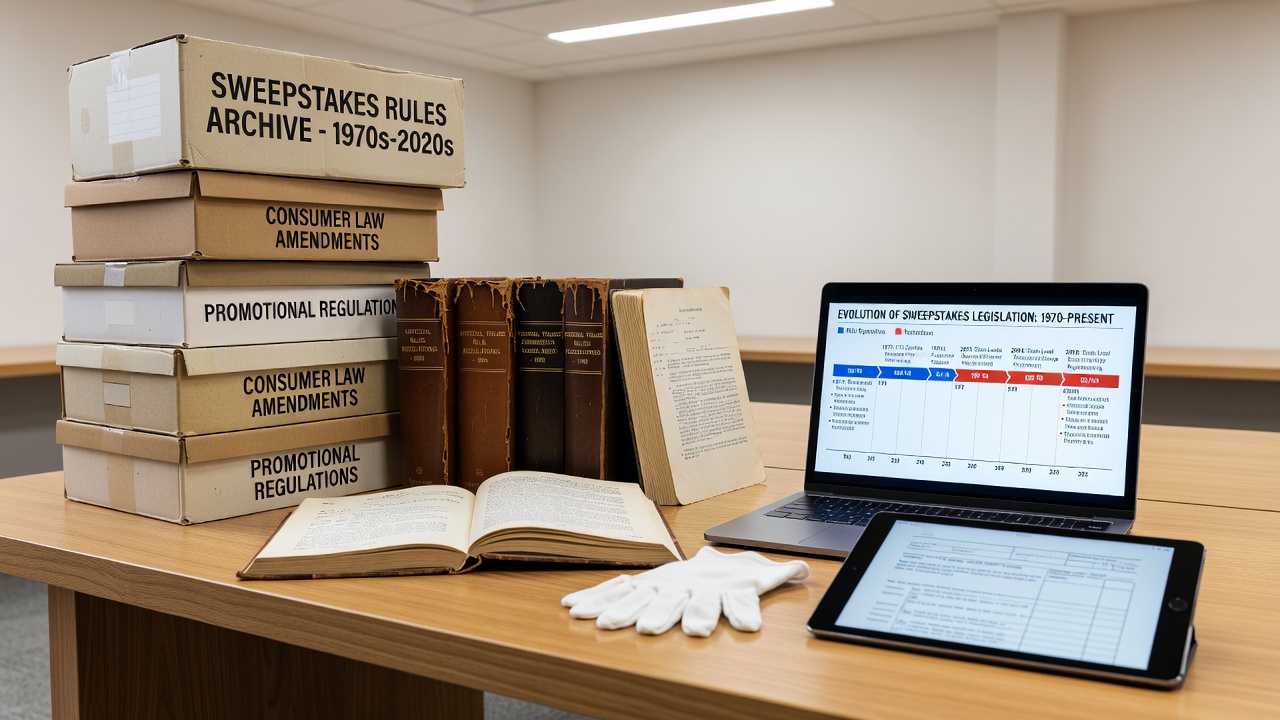
Modern archives increasingly digitize physical rule documents and enforcement records, which allows researchers to track how internet-era sweepstakes adapted to updated consumer laws regarding electronic entries and automated winner selection systems. According to records from the Australian Competition and Consumer Commission, recent filings reflect requirements for accessible terms and conditions on digital platforms that mirror earlier print-based disclosures.
Archival projects scheduled for expanded access in June 2026 include newly processed collections of email correspondence between sponsors and regulators from the early 2000s, and these materials document further refinements to rules addressing mobile entry methods and social media promotion standards. Data from these sources indicates ongoing alignment with evolving statutes on personal information handling during contest administration.
Conclusion
Archival evidence collectively demonstrates consistent patterns of rule adaptation in response to consumer protection developments, and these records continue to support analysis of regulatory impacts across different eras and jurisdictions. Access to such collections enables systematic examination of how legal changes shaped contest structures without reliance on secondary interpretations.